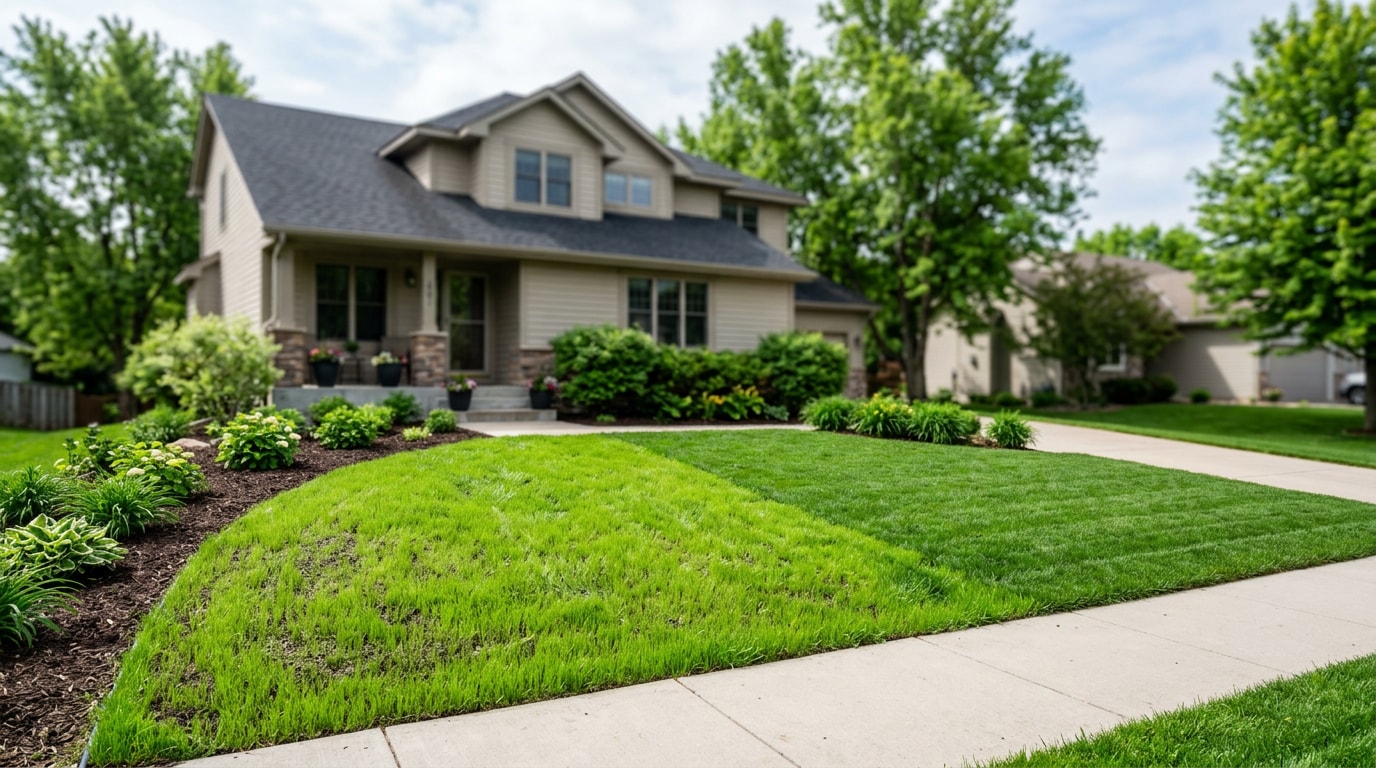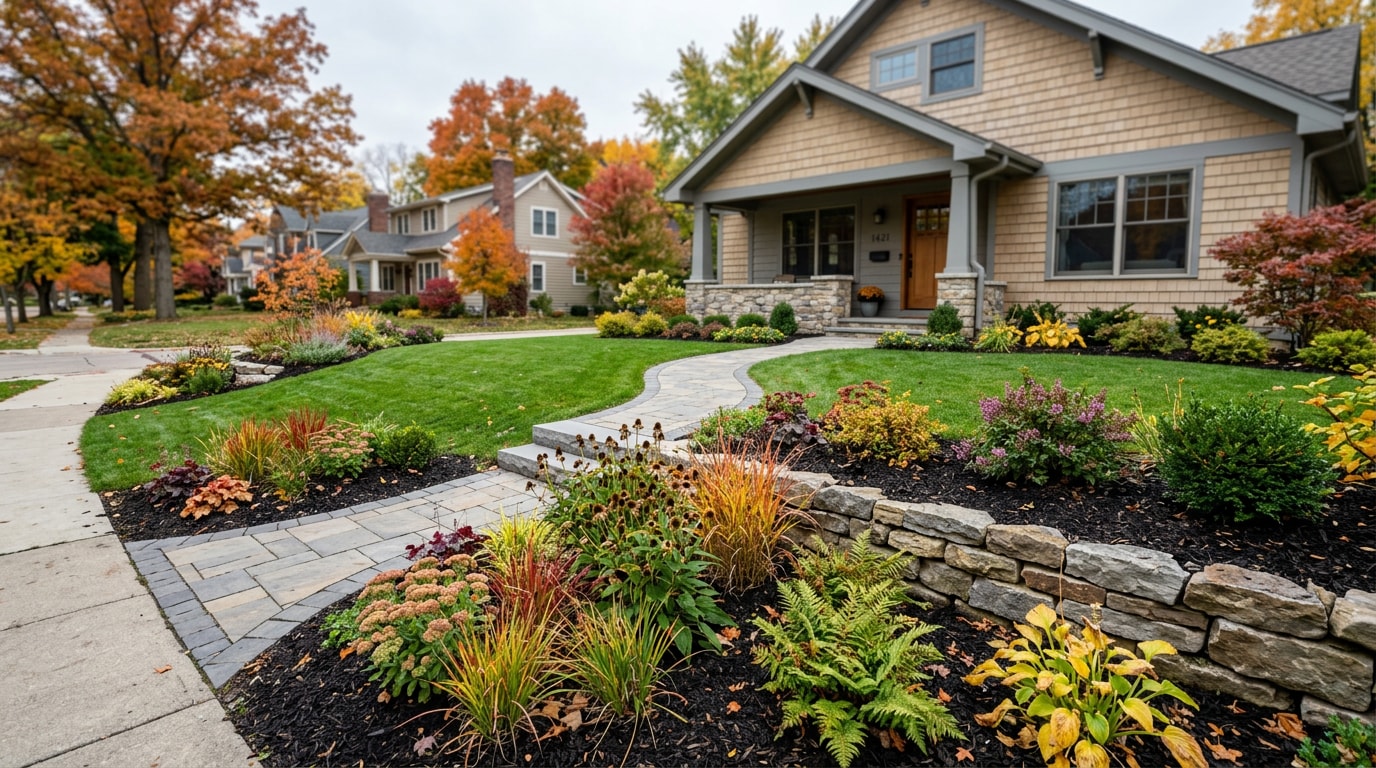
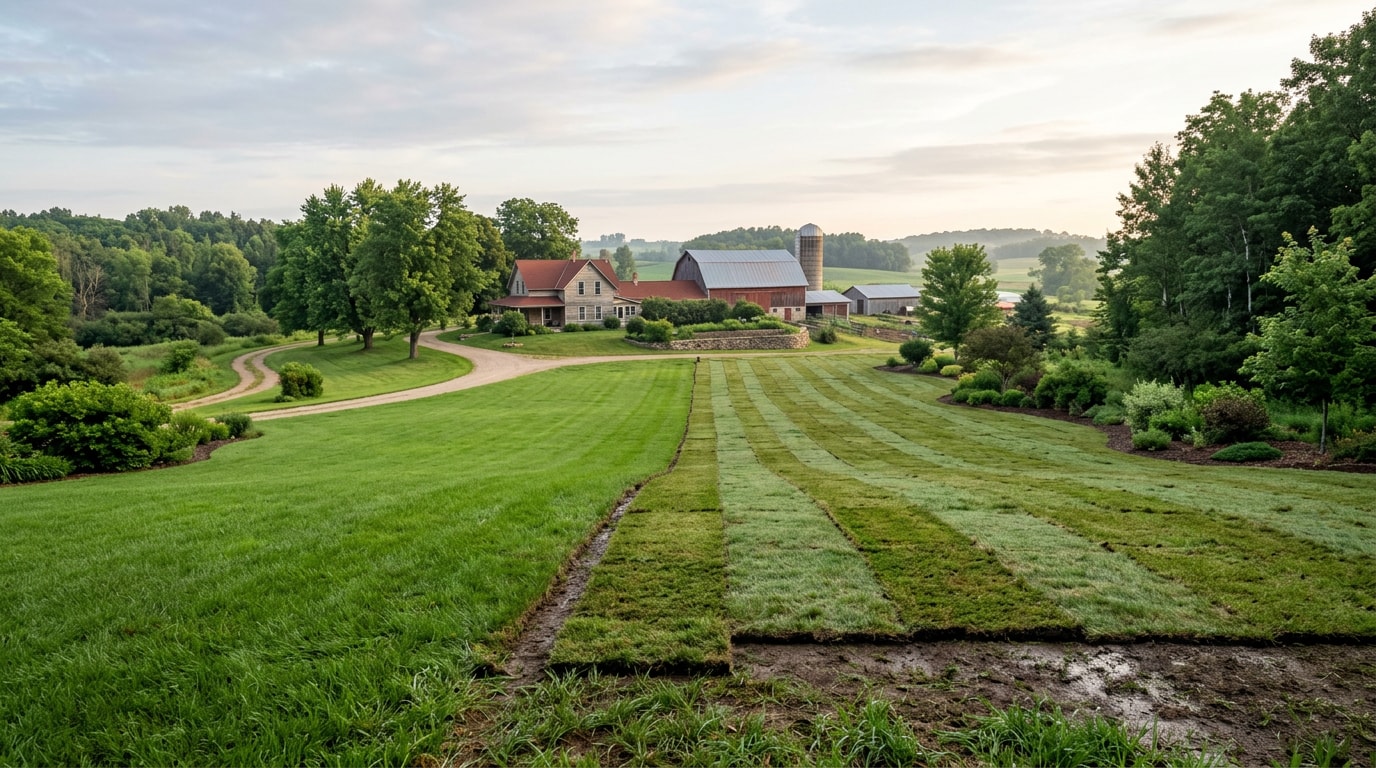
Residential turf installation in Polk County, WI comes down to three real choices: sod, hydroseed, or synthetic turf, and the right one depends on your soil, your budget, and whether your lot sits near one of the county's lakes. Each option has a different cost, timeline, and maintenance load. This guide walks through all three, plus a permit rule that catches a surprising number of lakefront homeowners off guard.
Sod, Hydroseed, or Synthetic Turf: Which Fits Your Yard
Most Polk County properties fall into one of two camps: homeowners who want a living lawn that matches their soil and sun exposure, and homeowners who want zero mowing, zero watering, and consistent green from April through November.
For a living lawn, you're choosing between sod installation for an instant, erosion-resistant surface, or grass seed installation (often applied as hydroseed) when you want a custom blend matched to shade, slope, or a waterfront no-mow look.
For a maintenance-free yard, synthetic turf skips the growing season entirely, but it needs a properly built base to survive Wisconsin's freeze-thaw cycles without rippling or settling.
Turf Installation Costs in Polk County: What to Budget
Pricing varies by site access, square footage, and how much grading or old-lawn removal the job needs. These are general planning ranges, not a quote.
| Method | Installed Cost (per sq ft) | Time to Usable Lawn | Upkeep After Install |
|---|---|---|---|
| Grass seed / hydroseed | $0.50–$2.00 | 6–8 weeks | Moderate, watering critical |
| Sod | $1.50–$3.00 | 2–3 weeks | Moderate, mowing and watering |
| Synthetic turf | $8–$18 | 1–3 days | Minimal, occasional rinse |
Site prep (grading, drainage, old sod removal) is usually priced separately and can add $0.25 to $1.00 per square foot depending on how uneven or rocky the lot is. Request a free estimate once you know your square footage so you're comparing real numbers, not national averages.
Natural Turf: Sod vs. Hydroseed in Polk County
Sod Installation
Sod gives you an instant, mowable lawn and immediate erosion control, which matters most on sloped yards or lots close to a lake or river. The tradeoff is cost and a narrower selection of grass blends compared to seed.
Hydroseeding and Grass Seed
Seed lets a contractor match the blend to the site, which is useful on shaded lots or waterfront properties where a no-mow fescue mix fits better than standard bluegrass. The catch is time. Seeded lawns may require up to two months to become fully established.
Timing matters more in Wisconsin than almost anywhere else. Late August into early September is the ideal time to establish a new lawn via seeding or sodding, and soil should be thoroughly prepared with amendments like topsoil or compost worked in to a depth of 4 to 6 inches , according to UW-Madison Extension's Wisconsin lawn care calendar. Spring seeding works too, but seedlings need to emerge and develop before hot summer weather hits, so spring seeding should happen in late April to early May.
Artificial Grass Installation Process
Synthetic turf installation breaks into three stages: preparation, measurement, and the physical install. Skipping any one of these is where Polk County lawns go wrong.
Site Preparation for Freeze-Thaw Soil
Wisconsin's seasonal freeze and thaw is harder on a turf base than most climates. Crews need to remove existing vegetation, grade for drainage, and compact a crushed-rock base deep enough to resist heaving.
Cold-region installers typically excavate deeper and build a thicker base than installers in warmer states. In colder regions, excavation may need to go up to 4 inches due to ground expansion and contraction, and a deeper 4-inch base is typically needed to handle freezing weather , per Turf Factory Direct's cold-climate installation guidance. Skip this step and the turf will show dips and uneven seams within a year or two.
Measuring Your Yard
Measure the full area, including curves and borders, before ordering material. An accurate measurement keeps your estimate honest and avoids a mid-project reorder that delays installation by days or weeks.
Laying, Seaming, and Securing Turf
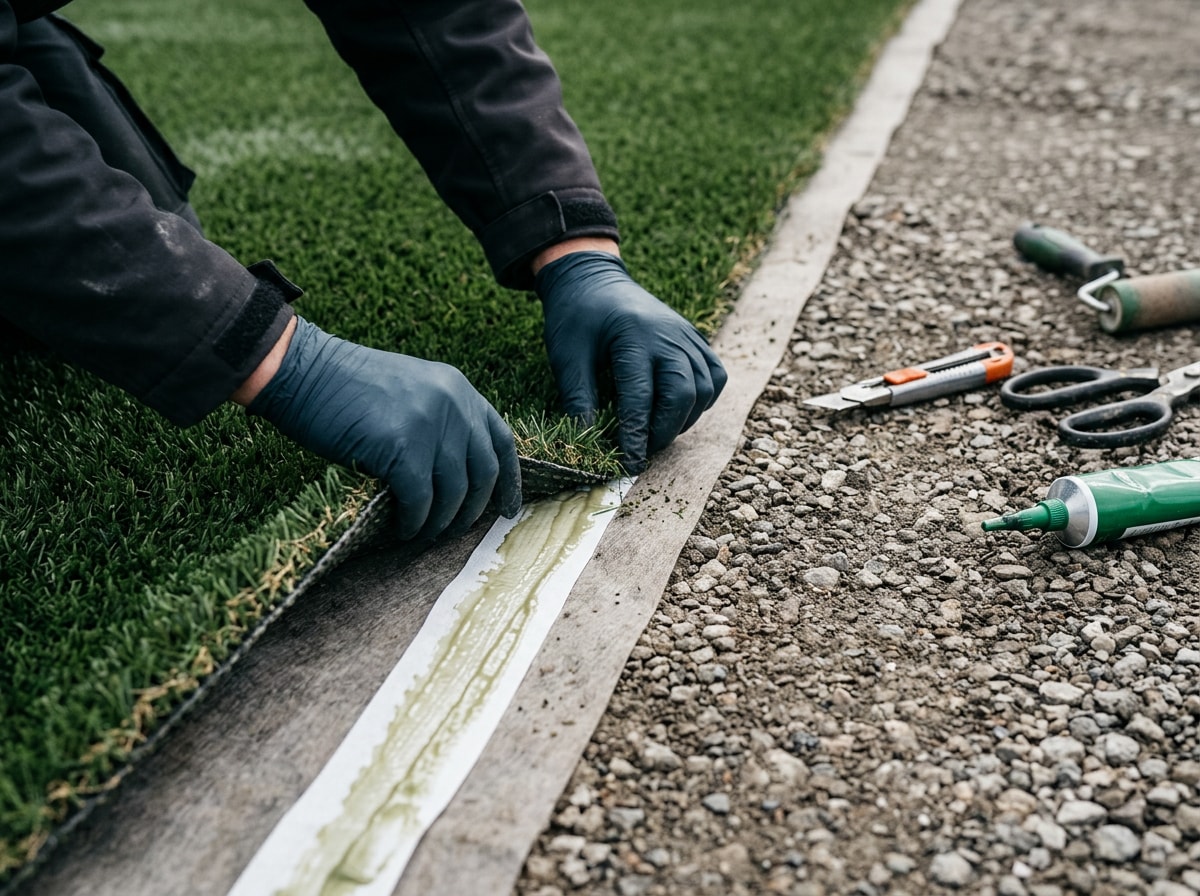
This is where a professional crew earns its fee. Turf is rolled out, cut to fit the site, seamed so the grain runs consistently, and secured along edges and seams with nails or adhesive. Poor seaming is the single biggest visible difference between a DIY job and a professional one.
Choosing Infill for a Lake Country Lawn
Infill affects drainage, pet-odor control, and how the turf feels underfoot, which matters in a county with as many lake properties and pet-owning households as Polk County has.
| Infill | Drainage | Cold-Climate Performance | Pet-Odor Control | Relative Cost |
|---|---|---|---|---|
| Green sand | Good | Solid | Fair | Low |
| Silica sand | Good | Solid | Fair | Low |
| Organic zeolite (e.g., ZeoFill) | Very good | Solid | Excellent | Moderate |
| Cooling infill (e.g., TCool) | Good | Limited need | Fair | Higher |
Green sand is a kiln-dried sand coated green, sold in two common grain sizes, and works for most standard residential lawns.
Silica sand is purpose-built for synthetic turf and supports stability in lower-traffic areas at a lower cost than specialty infills.
Organic zeolite infill is made from roughly 97% pure clinoptilolite, a volcanic mineral that binds ammonia before it can off-gas, making it the strongest option for pet-heavy yards.
Cooling infill reduces surface temperature in hot, dry climates. Given Wisconsin's shorter, cooler summers, it's a lower priority here than in southern markets, so most Polk County homeowners skip the added cost.
Lakefront Turf Installation: Polk County Shoreland Permit Rules
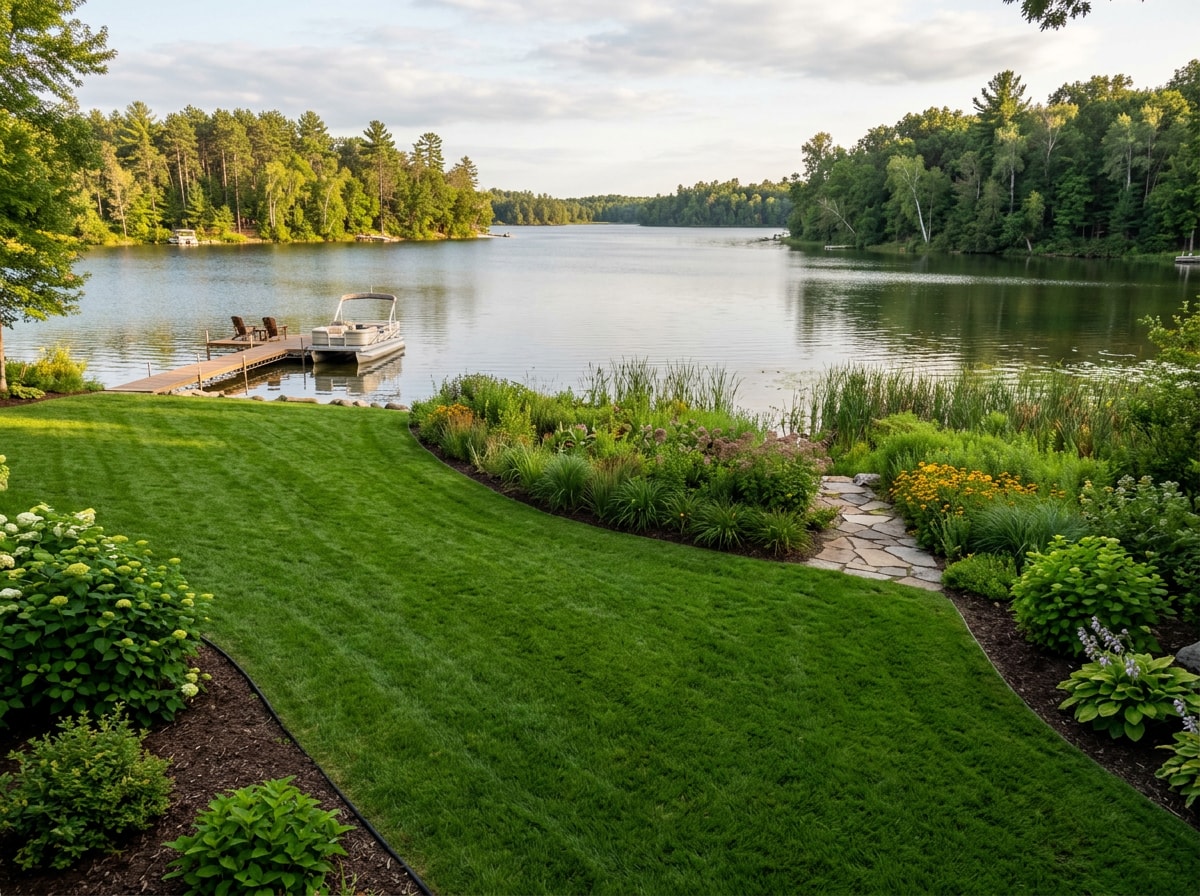
This is the part most turf guides skip entirely, and it matters a lot if your property touches a lake or river. Polk County has hundreds of miles of shoreline, and shoreland work is regulated well beyond just the waterline.
Shoreland zoning rules apply to unincorporated land within 1,000 feet of a navigable lake, flowage, or pond, or within 300 feet of a navigable stream , according to the Wisconsin DNR's Shoreland Management Program. Clearing vegetation to install a new lawn near the water isn't automatically allowed.
Locally, the rules get specific. If a landowner is planning to build a house, boathouse, retaining wall, patio, fire pit, garage, or remove vegetation near a lake in Polk County, a permit would be required from the Polk County Zoning office.
Removal of vegetation is regulated in the shoreland protection area, and each property is allowed a viewing corridor of no more than 35% of the lot width within that zone.
Read the full Polk County Shoreland Property Owner Handbook before clearing anything within 1,000 feet of a lake. If you're outside the shoreland zone, none of this applies, but it's worth a two-minute check before a crew shows up with sod cutters.
Where We Install Turf Across Polk County
We install sod, hydroseed, and synthetic turf throughout Polk County, WI, including Osceola and Amery, along with nearby New Richmond and Hudson. If a damaged lawn needs more than new turf, our landscape renovation and rejuvenation service handles grading, drainage correction, and bed rework in the same visit. For a closer look at synthetic options specifically, see our guide to artificial grass services in Osceola, WI.
Spring and Fall Turf Care After Installation
A newly installed lawn needs the most attention in its first year.
- Spring: Repair winter-killed patches with matching sod or seed so new growth blends in rather than leaving a visible patchwork.
- Fall: This is the stronger window for establishing turf strength going into winter, and it's the best time to overseed thin spots before the ground freezes.
- Ongoing: A consistent mowing and feeding schedule through the first growing season does more for long-term density than any single product application. Our landscape maintenance plans are built around that first-year window.
About the Author
This guide was written by Doug Kromrey, owner and operator of Sunrise Lawns Landscape & Irrigation, a family-owned company based in Star Prairie, WI, established in 1996 and serving Polk County and the surrounding region. Our crews have graded turf bases through more Wisconsin spring thaws than we can count, and the lawns that fail almost always share one thing: a base that was rushed. Visit our homepage to see our full service lineup, or browse recent projects before reaching out.
Ready to compare options for your lot? Get a free estimate and we'll walk your property, flag any shoreland considerations, and give you real numbers instead of national averages.
FAQ
How much does residential turf installation cost in Polk County, WI?
Sod typically runs $1.50 to $3.00 per square foot installed, hydroseed or grass seed runs $0.50 to $2.00, and synthetic turf runs $8 to $18 per square foot. Site prep is often priced separately, so get a site-specific quote before budgeting.
Do I need a permit to install turf near a lake in Polk County?
Possibly. If your property is within 1,000 feet of a navigable lake or 300 feet of a navigable stream, vegetation removal and landscaping work may require a permit from the Polk County Zoning office. Check the county's shoreland handbook or call the zoning office before clearing ground near the water.
What's the best time of year to install sod or seed in Polk County?
Late August into early September is the strongest window for both sodding and seeding, since soil is warm and weed pressure is low. Spring works too, but seed needs to go down by early May so it's established before summer heat.
How long does artificial turf last?
Most residential synthetic turf lasts 15 to 20 years with proper installation and routine care, though actual lifespan depends on foot traffic, sun exposure, and the manufacturer's warranty terms.
Does snow or winter weather damage artificial turf?
Properly installed synthetic turf drains well under snow and resists freeze damage, though heavy ice buildup can temporarily flatten the blades until it melts.
Is artificial turf safe for pets and kids?
Yes. Modern synthetic turf paired with a pet-safe infill, such as organic zeolite, makes for a surface that's safe for both children and pets once it's installed correctly over a well-drained base.