Small backyard hot tub landscaping on a budget in Chisago County, MN comes down to three things: privacy, a stable base, and the local setback and frost rules that most generic advice never mentions. A tight lot actually works in your favor here, since less square footage means fewer materials and a faster finish. This guide covers the ideas that matter most for compact Chisago County yards, plus the code details that can save you a redo.
Start With Placement: Where a Small Hot Tub Actually Works
Before any plants go in or a single board gets cut, placement decides whether the project feels effortless or fights the yard it's in. On a sprawling lot, placement is flexible. On a tighter Chisago County lot, especially a lake property or a narrow in-town yard, the footprint narrows fast.
Balance Privacy, Access, and a View Worth Soaking In
The right spot balances three things: privacy from neighbors, a short walk from the house, and a view worth sitting in. In a small yard, that sweet spot usually sits closer to the house than people expect.
A shorter walk matters more in a Minnesota winter than it does in July. Tight yards also rarely have room to spare, so the shortest practical path from the door to the tub is almost always the right call.
Check Setback and Shoreland Rules Before You Commit to a Spot
This same decision affects whether your setup meets local rules. Chisago County's shoreland areas carry specific setback standards that vary by waterbody classification, and zoning approval is required for any project that could impact those setbacks, including a deck or hot tub pad near a lake. The county's building and zoning permit page is the fastest way to confirm what applies to your lot before you start digging.
If you're not sure whether your yard qualifies, a quick site walk can settle it. Contact our team for a free estimate and we'll flag any setback issues before you spend a dollar on materials.
A Small Yard Is a Budget Advantage, Not Just a Limit
Compact yards bring real constraints: narrow side yards, lake-lot setbacks, and Minnesota's freeze-thaw cycle, which shifts unreinforced ground year over year. But less square footage also means lower material costs and less upkeep down the road.
That framing matters for budget landscaping. Instead of spreading a limited budget thin across a large yard, a small yard lets you put more money into fewer, better elements: solid seating, good lighting, and easy access, rather than square footage you don't actually need.
Budget-Friendly Landscaping Ideas for a Small Hot Tub Area
With placement settled, the next step is filling in the space. These ideas cover the themes that come up again and again in small-yard hot tub landscaping, each adapted for a Chisago County budget and climate.
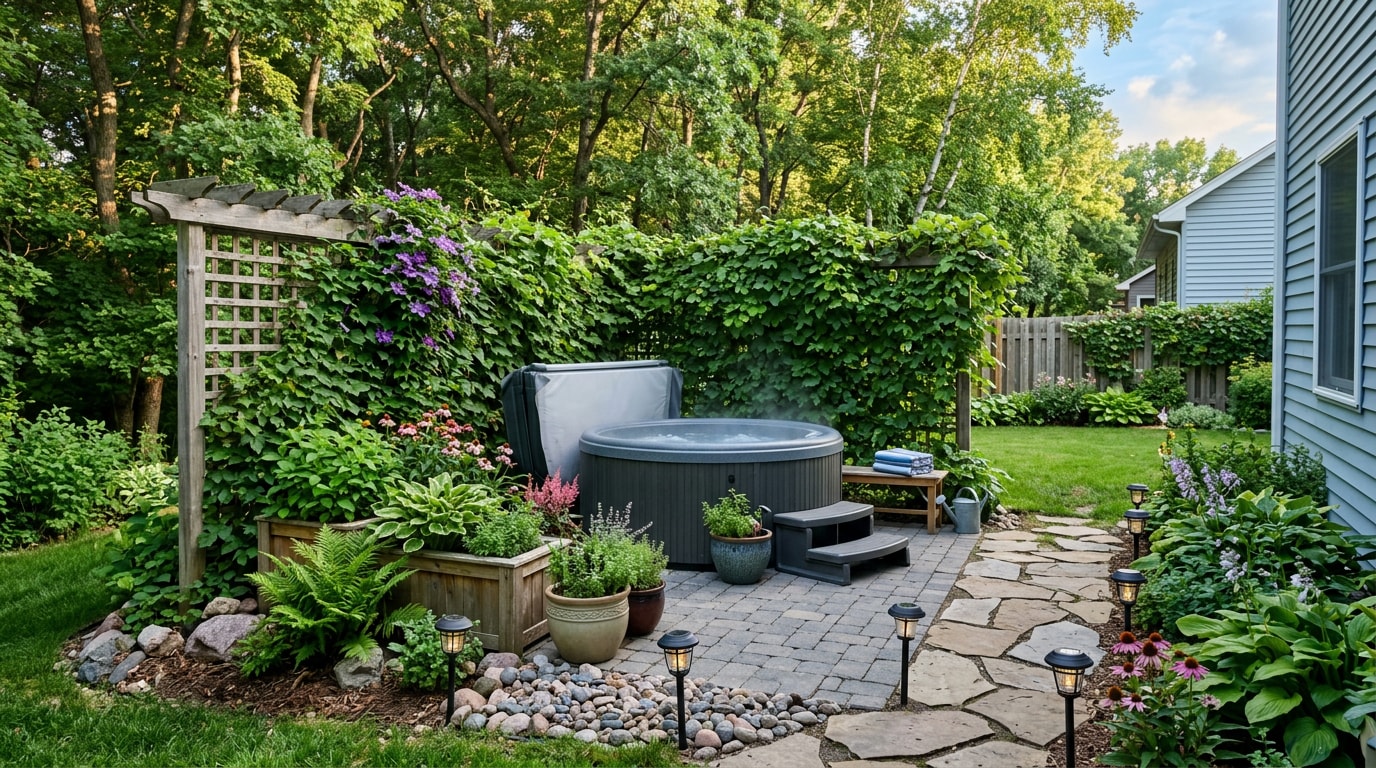
Build Privacy With a Trellis, Curtains, or Fast-Growing Plants
Privacy is the most common request for any backyard hot tub, and it's also the cheapest problem to solve with plants instead of construction.
- A trellis with climbing vines can turn a narrow side yard into a living screen within a season or two.
- Outdoor curtains hung from a pergola or a simple freestanding frame create a movable barrier you can adjust by season.
- Fast-growing, zone-appropriate shrubs along a property line add privacy without the cost of a built fence.
Here's what most generic landscaping advice skips: Minnesota's state energy code requires outdoor pools and in-ground permanently installed spas deeper than 24 inches to be enclosed by a non-climbable barrier at least 5 feet in total height, with a self-closing, self-latching gate. A planted screen alone won't satisfy that requirement if your tub meets that depth threshold. Check with your city or Chisago County's building department before treating a trellis as your only barrier. One city's published summary of the rule is a useful reference for what the state code actually requires, though your local building official has the final word.
Think Vertically to Add Color Without Losing Floor Space
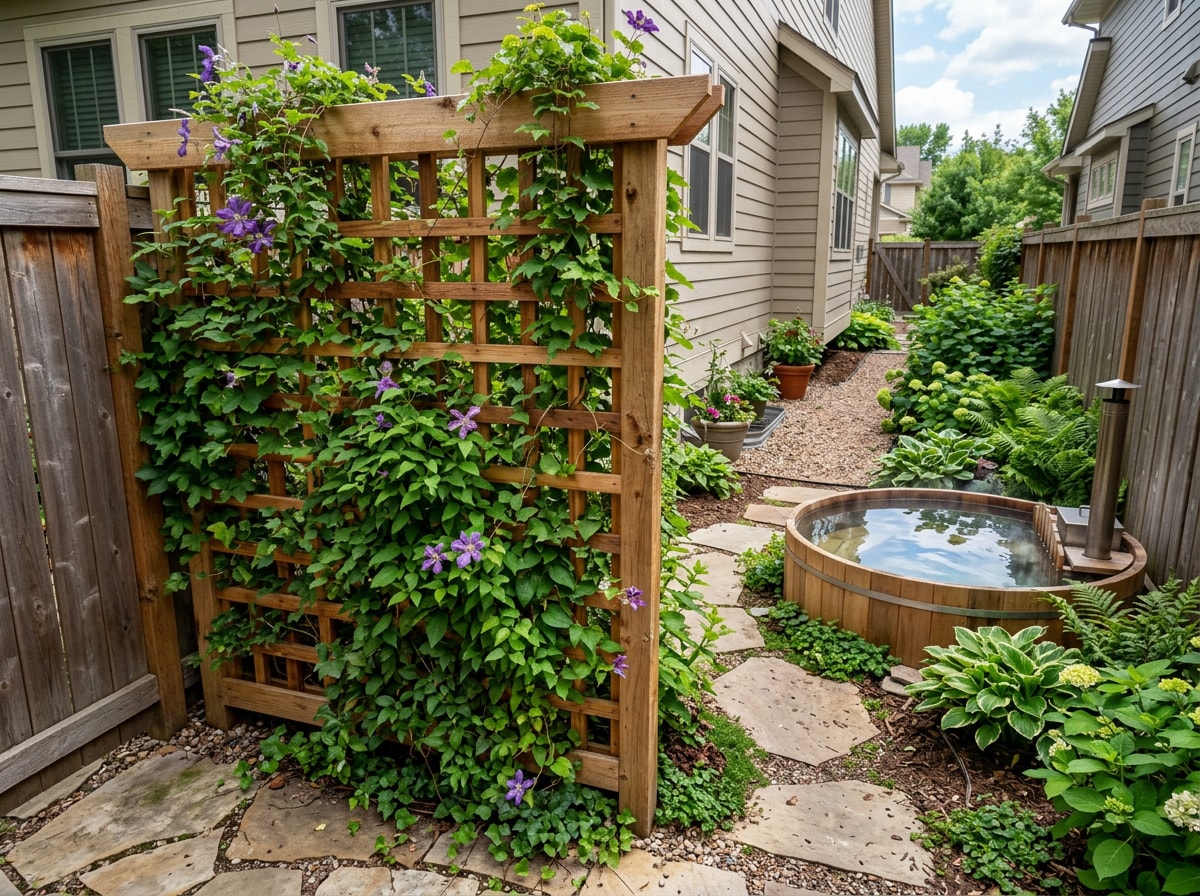
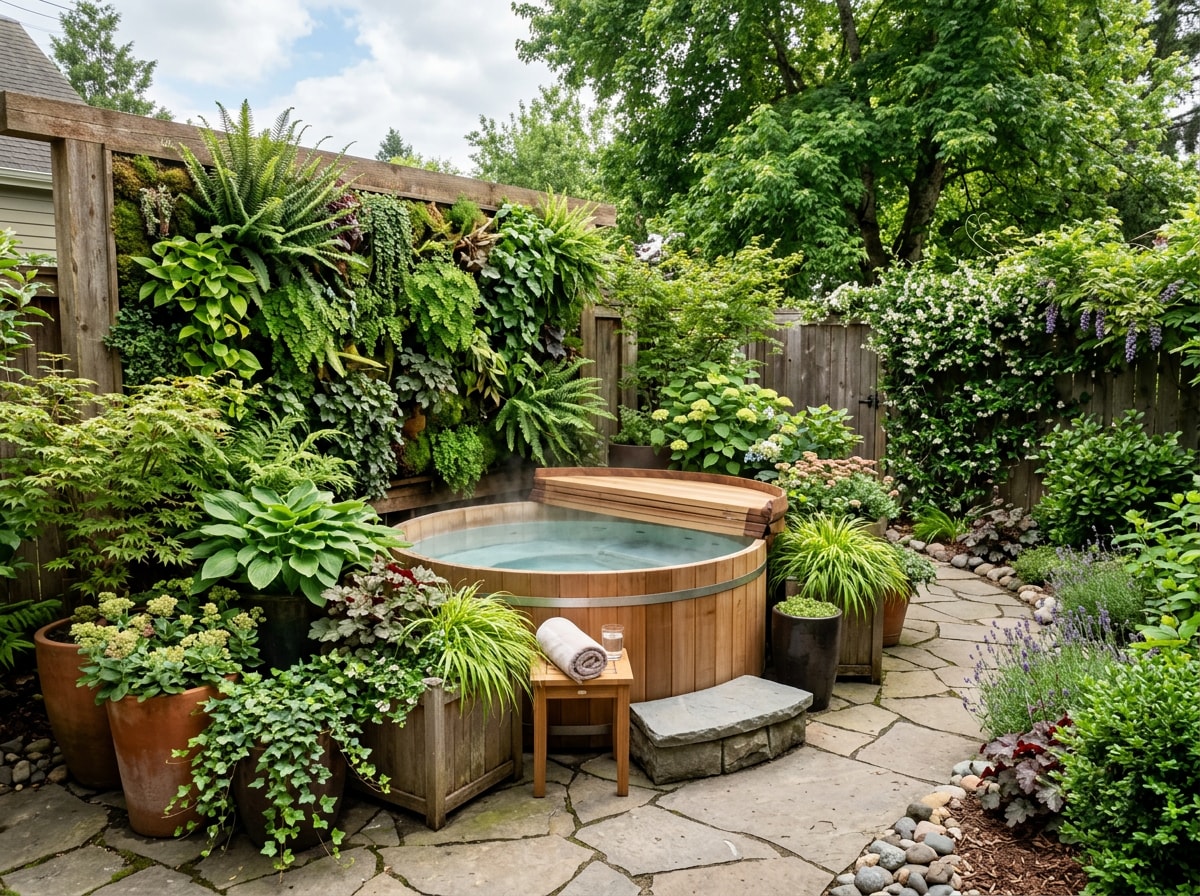
In a tight lot, going vertical is the fastest way to add greenery without giving up ground space you can't spare.
- Hanging planters and wall-mounted shelving turn an unused fence line into usable color.
- Tall, narrow containers mixed with trailing planters add depth without crowding the hot tub area.
- A small living wall of ferns or herbs works double duty as decor and a privacy layer.
Stick with hardy, zone-appropriate plants for anything going in the ground near the tub. Chisago County winters are hard on fussy perennials, and replacing frost-killed plants every spring eats into the budget you're trying to protect. Our perennial plantings service focuses on species that actually survive this climate, which saves money over a few seasons compared to picking plants off a big-box shelf.
Light the Path Safely, Not Just Prettily
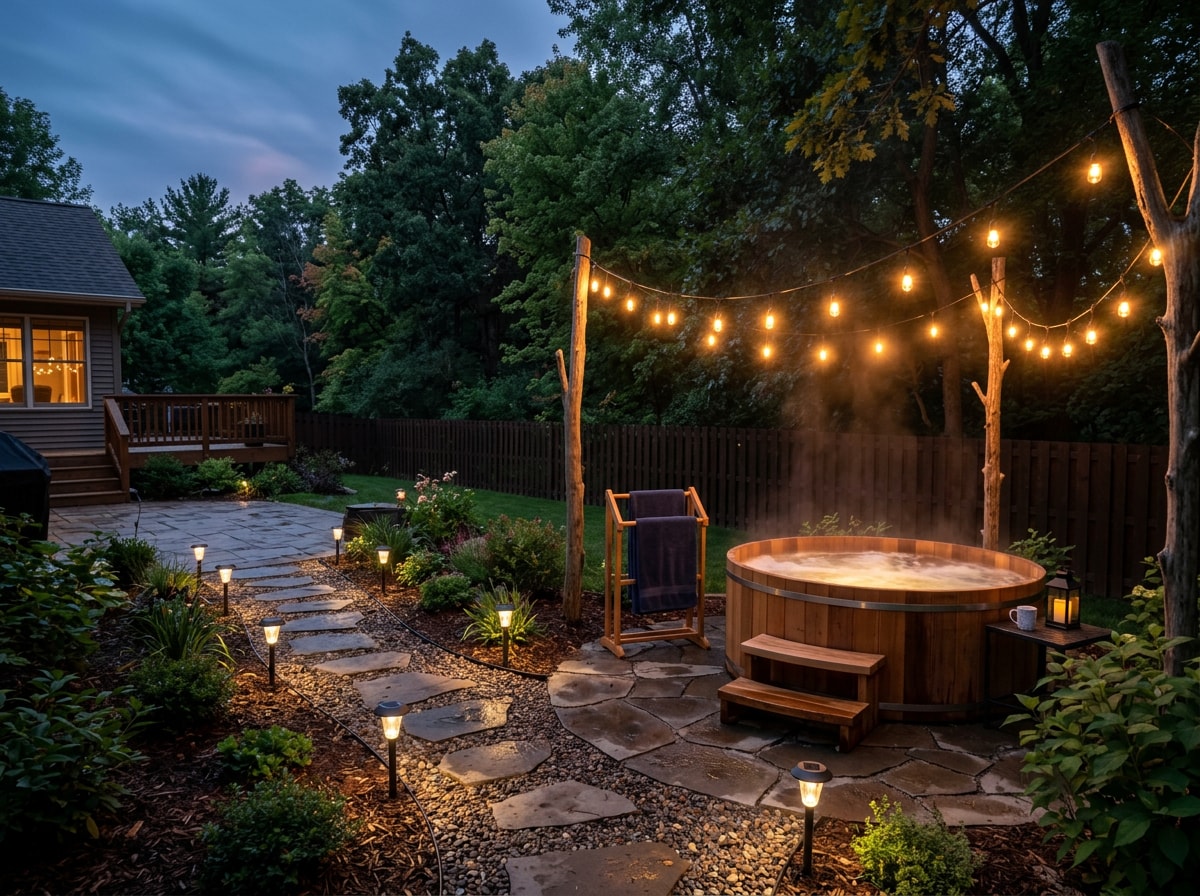
Solar lighting and string lights are the two most budget-friendly ways to light a small hot tub area, since neither needs an electrician or new wiring.
- String lights draped overhead or along a fence line bring a low-cost glow.
- Solar path lights can edge a walkway or trace the perimeter of the spa pad.
- A line of lights along the route from the door to the tub also does double duty.
Beyond ambiance, lighting serves a practical purpose in Chisago County. Icy walkways after dark are a real hazard from November through March, and a lit path makes the nightly trip to the tub noticeably safer. Keeping plant beds and lighting trimmed through the season is part of what our landscape maintenance service handles for clients who'd rather not deal with it themselves.
Build a Small Lounge and Choose a Base That Won't Heave
Rather than making the tub the only feature, build a small lounge around it: a couple of weatherproof chairs, a side table, and a few textiles turn a single feature into a destination. A nearby stone fire pit extends the season on either side of hot tub weather, which matters in a climate with a short outdoor window.
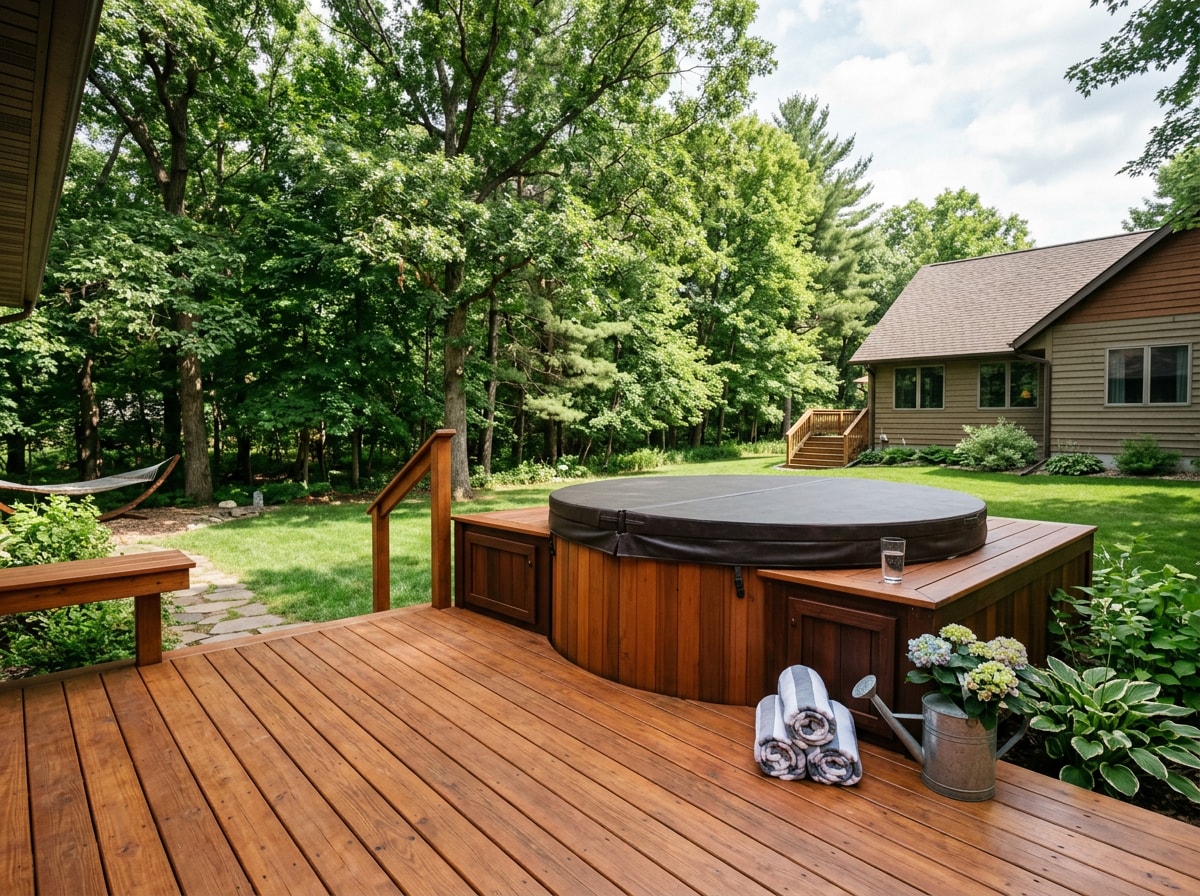
The base underneath the tub matters just as much as what surrounds it. An existing deck or patio is often the fastest way to cut costs, since you may not need new concrete or a spa pad at all.
| Base Option | Relative Cost | Best For |
|---|---|---|
| Compacted crushed gravel | $ | DIY-friendly, drains well, works for lighter or portable tubs |
| Reused existing deck or patio | $ | Fastest option when the structure is already sound |
| New pressure-treated deck | $$ | Mid-range cost, matches tub to surrounding landscaping |
| Reinforced concrete slab or paver patio | $$$ | Heaviest tubs, in-ground installs, longest lifespan |
If you're building new, any support posts need footings dug to the correct frost depth, or they'll heave with the freeze-thaw cycle and throw the structure out of level within a year or two. Chisago County sits in the state's Zone II frost bracket, where Minnesota's administrative code sets a minimum footing depth of 3.5 feet in the absence of an engineer's determination otherwise. A poured slab or structural deck is a job for a crew that already knows this code; our hardscape patio installation and retaining wall installation teams build to that depth as a matter of course on lake lots across the county.
3 Ways to Stretch a Small Hot Tub Budget Further
- Phase the project. Tackle privacy and the base first, then add plants and lighting over a season or two instead of all at once.
- DIY the labor-only parts. Planting, mulching, and assembling a trellis don't require a contractor. Save paid labor for anything structural, like footings or a retaining wall.
- Pick one "wow" feature. A single standout element, like a living wall or a well-lit lounge corner, reads as more intentional than several small, half-finished touches.
At Sunrise Lawns & Landscaping, our crews regularly grade small hot tub pads on Chisago County's lake lots, and the deck-reuse approach above is consistently the one that saves homeowners the most money without cutting corners on safety or code. If you want a second opinion on where your budget will stretch furthest, browse our past projects or get a free estimate before you buy materials.
For a broader look at how a designer approaches a full backyard plan in this area, see our guide to landscaping designers near Lindstrom, MN, which covers process and pricing for projects that go beyond a single hot tub corner. We also serve nearby Lindstrom and the rest of Chisago County directly.
FAQ
What should you put around a hot tub?
Prioritize a privacy screen, a stable base, nearby seating, and enough lighting to see the path after dark. Plantings and a lounge area are the finishing touches that turn a functional setup into a space you actually want to use.
How much clearance space do you need around a hot tub?
Plan for roughly 3 feet of clear space on at least two sides of the tub, more if a cover lifter needs room to swing open. The Pool & Hot Tub Alliance notes that exact clearances should follow federal, state, or local code along with the manufacturer's installation instructions, so check your tub's spec sheet before finalizing the layout.
Do you need a fence around a hot tub in Minnesota?
In many cases, yes. Minnesota's state energy code requires a non-climbable barrier at least 5 feet high around outdoor pools and in-ground spas deeper than 24 inches, with a self-closing, self-latching gate. A lockable, code-compliant cover is sometimes accepted in place of a full fence. Confirm the specifics with your city or Chisago County's building department before finalizing your design.
What is the best foundation for a hot tub?
A reinforced concrete slab is the most durable option, a well-built deck is a strong middle ground, and compacted crushed gravel is typically the most budget-friendly choice for a small yard. The right pick depends on your tub's weight, your soil, and how deep your footings need to go to clear Minnesota's frost line.
How much does hot tub landscaping cost on a budget?
A phased plan that leans on DIY planting and an existing deck can come in well under $1,000. A full build with a new base, professional hardscape, and lighting typically runs into the thousands, depending on materials and whether you hire out the structural work. Phasing the project, as outlined above, is the most reliable way to control the total.