Turf care Amery, WI homeowners rely on covers more ground than a single mow-and-go visit. A healthy lawn here needs mowing, aeration, a seasonal fertilizer program, pest control, and cleanup timed to Wisconsin's freeze-thaw cycles and the clay-heavy soil common around Polk County.
This guide breaks down every piece of a complete turf care program, in the order most Amery homeowners actually need it, so you know exactly what to ask for when comparing local providers. If you'd rather skip ahead, request a free estimate and we'll walk your property with you.
What Is Turf Care, Exactly?
Turf care refers to the maintenance and management of grass surfaces, typically for lawns, sports fields, and golf courses, involving tasks such as mowing, fertilizing, aerating, overseeding, pest management, and irrigation to ensure healthy, lush, and durable turf. In residential terms, that means it covers both the mechanical side (mowing, edging, aeration) and the chemical/biological side (fertilization, weed control, grub treatment) of keeping a lawn alive year-round, not just mowed.
Most Amery properties need a mix of both, scheduled around the local growing season rather than a generic calendar. That's the program outlined below.
Lawn Maintenance Services
Lawn maintenance covers the recurring, hands-on work, mowing, edging, and aeration, that keeps turf healthy week to week. This is separate from the seasonal fertilizer programs covered later in this guide. See our landscape maintenance services for plan details.
Lawn Mowing & Cutting
Cool-season lawns around Amery generally need mowing every 5 to 7 days during peak spring and early summer growth, tapering off as temperatures drop in late summer.
Cutting height matters as much as frequency. Mowing too short stresses roots and opens the door to weeds, so most mowing programs hold a height between 3 and 3.5 inches. Consistent mowing at the right height also reduces how often you need to water.
Lawn Edging
Edging cleans up the lines along driveways, sidewalks, and landscape beds where a mower can't reach cleanly. Crisp edging keeps grass from creeping into gravel or mulch and gives an otherwise well-mowed yard a noticeably sharper, finished look. It's a small detail, but it's usually the first thing neighbors notice.
Core Aeration
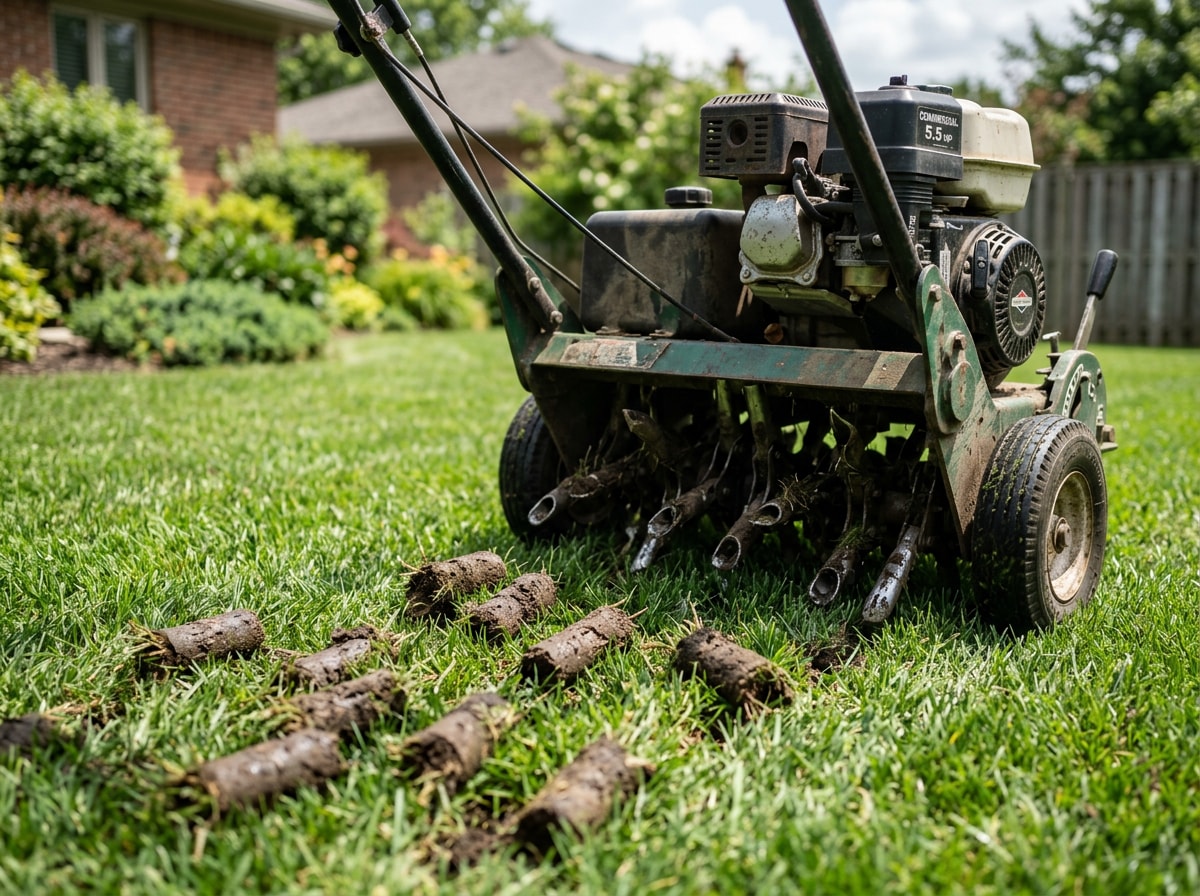
Core aeration pulls small plugs of soil out of the lawn to relieve compaction, break down thatch, and let water, air, and nutrients reach grass roots more easily. For Amery-area lawns, timing and frequency matter more than most marketing pages let on.
Early fall is a prime time for overseeding and core aerating lawns , according to UW-Madison Extension, with fall being an excellent time for aerating, with the key factor for success being adequate soil moisture. Mid-to-late spring works as a secondary window, though spring aeration can encourage weed-seed germination in already-disturbed soil.
How often a lawn needs aeration depends on soil compaction and thatch depth. Most lawns will benefit from being aerated every 1 to 5 years, with the frequency determined by the rate of thatch production and soil compaction, while compacted or thatchy sites will need more frequent aeration, up to twice a year. That second category describes a lot of older Amery properties sitting on heavy clay subsoil.
On the clay lots we service along the Apple River corridor and around Pike Lake, we see compaction build up noticeably faster than on the sandier ground outside town, which is why we check soil texture before recommending an aeration schedule rather than defaulting to "once a year" for every yard.
Fertilization & Weed/Pest Control
A structured, seasonal fertilization program consistently outperforms one-off weed or pest treatments because it addresses turf stress before it becomes visible damage.
Seasonal Fertilizer Program
A multi-step fertilizer program spreads applications across the growing season so each one targets a specific turf need: early spring green-up paired with pre-emergent weed control, a second spring treatment to build density, and a summer round to prepare turf for heat stress.
Labor Day is the optimum time for fertilizing lawns in Wisconsin , per UW-Madison Extension, because nitrogen is the primary nutrient lawn grasses need on an annual basis, contributing to green color and promoting the grass plant development that helps maintain a thick stand of grass. A single well-timed fall application matters more than several poorly timed ones.
Insect & Lawn Pest Control
Grub control and Japanese beetle control are the two pest issues that come up most often on Amery lawns. Preventative insecticides should be applied around the time or just before egg-laying by the adult beetles to maximize effectiveness, while curative insecticides are used when grubs are present and damage is noted, often August through October. For Japanese beetle specifically, that preventative window falls in June and July, well before the brown patches show up.
Ants and other surface insects are more of a nuisance than a turf threat, but grubs can cause real dead patches if left untreated. Getting the timing right, not just the product, is what separates effective grub control from a wasted application.
Spring Lawn Care
Spring lawn care focuses on diagnosing what winter left behind before the rest of the season's program starts. One common issue is snow mold, which shows up as circular patches of tan, dead-looking grass caused by a fungus that thrives in cool, wet soil as snow melts.
Where winter damage has left bare or thin patches, overseeding helps even out the turf by filling gaps with new grass seed rather than leaving dead spots to turn into weed patches. See our grass seed installation options if your lawn needs more than a patch job, or our sod installation service for areas too far gone to recover from seed alone.
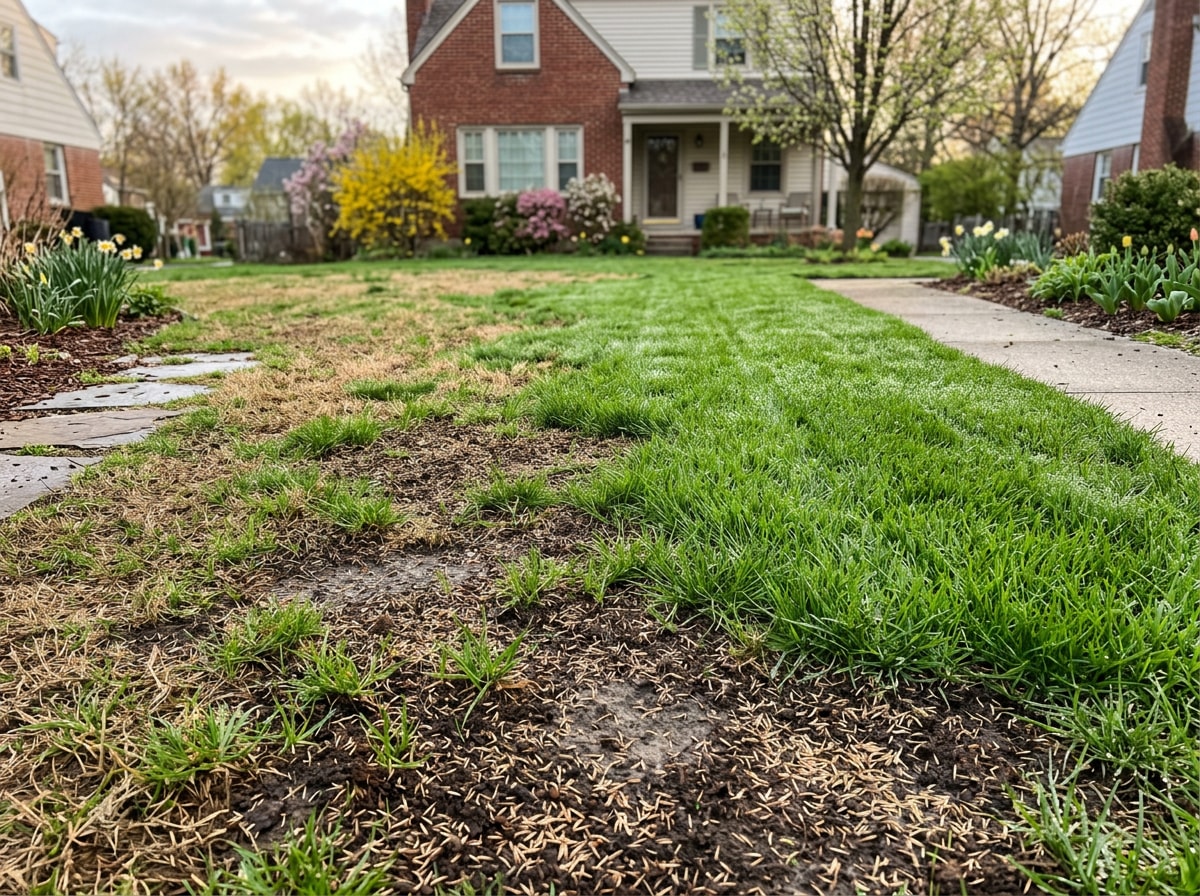
Fall Lawn Care & Cleanup
Fall lawn care centers on cleanup before snow arrives: leaf removal from roofs, gutters, lawns, and beds, vacuumed and hauled away rather than left to break down on turf.
Leaving a heavy layer of wet leaves on grass through fall blocks sunlight and traps moisture against the blades, encouraging the same fungal issues that show up as snow mold the following spring. A thorough fall cleanup is one of the cheapest ways to protect next year's lawn.
Overseeding should be completed by early September to ensure adequate time for new grass plants to get established before hard freezes set in , so if your lawn needs seed, fall cleanup and fall overseeding should be scheduled together, not as separate afterthoughts.
Organic Lawn Care
Organic lawn care reduces or eliminates synthetic pesticides and fertilizers in favor of compost-based nutrients, mechanical weed control, and slower-release organic products. Some Amery homeowners choose this route for pets and kids who spend a lot of time on the lawn; others are motivated by concerns about runoff into nearby lakes and the Apple River.
Eco-friendly lawn care generally trades faster visible results for lower chemical load. The EPA's "Healthy Lawn, Healthy Environment" guidance includes tips on working with nature to grow a healthy lawn while minimizing pesticide use , and it pairs naturally with practices like reduced mowing frequency and proper watering that limit nutrient runoff in the first place.
Landscape Maintenance & Irrigation
Landscape maintenance deals with ongoing care of beds, shrubs, and mulch, a different job from the turf itself, though the two are usually scheduled together. Watering consistency also plays a direct role in turf health; a poorly timed or malfunctioning system can undo an otherwise solid fertilizer program. Our irrigation system maintenance service keeps sprinkler heads, zones, and timers working the way your turf schedule assumes they are.
Mulch Refresh
A mulch refresh breaks up and rejuvenates faded, compacted mulch in landscape beds, restoring color while improving drainage around plants. Fresh, properly aerated mulch also helps prevent fungus and mold growth that tends to creep into old, matted-down beds by midsummer.
Snow Plowing & Winter Services
Many turf care companies serving Amery bundle winter property services alongside their lawn programs, since the same crews and equipment carry over. Winter services typically include snow plowing, ice management, and keeping walkways and driveways clear through the season.
Signing up for winter services alongside a lawn care plan often locks in priority scheduling during heavy snow events. Get a free estimate to confirm what's available for your part of Amery.
Turf Care Service Comparison
| Service | Best Timing | Typical Frequency |
|---|---|---|
| Mowing | May through September | Weekly (5–7 days) |
| Core aeration | Early fall (September) | Every 1–5 years, or up to 2x/year on compacted clay |
| Fertilization | Spring start, Labor Day key application | 3–5 applications per season |
| Grub prevention | June–July | Annually, preventative |
| Overseeding | Late August–early September | As needed for bare or thin spots |
| Fall cleanup | October–November | Once per season, before snow |
FAQ
What is the difference between turf care and lawn care?
Turf care is the broader term covering both the mechanical side of a lawn (mowing, edging, aeration) and the chemical/biological side (fertilization, weed and pest control). "Lawn care" is often used interchangeably, but when a provider separates the two, lawn care usually refers specifically to the fertilization and pest-control side of the program.
How much does lawn care cost?
Pricing varies widely based on lawn size, service frequency, and whether you choose per-visit mowing or a bundled seasonal plan covering fertilization and weed control. Per-visit mowing often runs lower upfront but costs more over a season than a package deal. Request a local quote for an accurate number.
How often should I aerate my lawn?
Most lawns benefit from aeration every one to five years. Heavily compacted clay soils common around Polk County, or lawns with thick thatch, may need aeration once or even twice a year to stay healthy.
What is the best time of year to aerate a lawn in Wisconsin?
Early fall, especially September, is the best window for cool-season Wisconsin lawns because turf recovers quickly in mild temperatures before winter. Mid-to-late spring works as a backup, though it carries a higher risk of encouraging weed growth in freshly aerated soil.
When should I fertilize my lawn in Wisconsin?
Start in spring for green-up, but treat the Labor Day application as the one you can't skip. Fall feeding builds root strength and winter survival more than any other application in the program.
How do I get rid of grubs in my lawn?
Apply a preventative treatment in June or July, before Japanese beetles lay eggs. If you missed that window and damage has already appeared, a curative treatment applied August through October still works, though it's less efficient than prevention.
How much does lawn aeration cost?
Price depends mainly on lawn size and current soil condition, with larger or more compacted lawns taking longer to treat. Getting a local Amery quote is the most reliable way to budget for it.
Ready to put a real schedule behind your lawn instead of guessing at timing? Visit our homepage to see our full service lineup, or get a free estimate and we'll build a program around your soil, not a generic calendar.