Landscaping for privacy in New Richmond, WI turns an exposed yard, whether you're staring at a neighbor's deck, a busy road, or open farmland, into a space you actually want to use. The right mix of trees, hedges, and hardscape blocks sightlines without a decade-long wait for a payoff. Here's what actually holds up through a St. Croix County winter, and what doesn't.
Why New Richmond Yards Need a Privacy Plan
Most privacy projects start with one specific annoyance, not a vague wish for "more privacy." A neighbor's second-story window overlooking your patio. A sidewalk a few feet from your living room. A hot tub that feels like it's on display.
Other common triggers:
- Buffering two yards from each other
- Hiding a utility box, shed, or trash cans
- Adding a layer of home security
- Creating a contained play area for kids and pets
The problem looks different depending on your lot. In-town properties deal with close neighbors and street visibility. Rural acreage around New Richmond often needs buffering from wind, road noise, or just the feeling of being exposed on all sides. Name your specific problem before picking a solution. A fix that works for a tight in-town lot often fails on five acres, and vice versa.
The Fastest and Cheapest Ways to Add Privacy
If you need a result this season, not in five years, start here. Not every fix requires a fence or a decade of growth.
- Outdoor curtains or shade sails section off a patio or hot tub seasonally with zero digging.
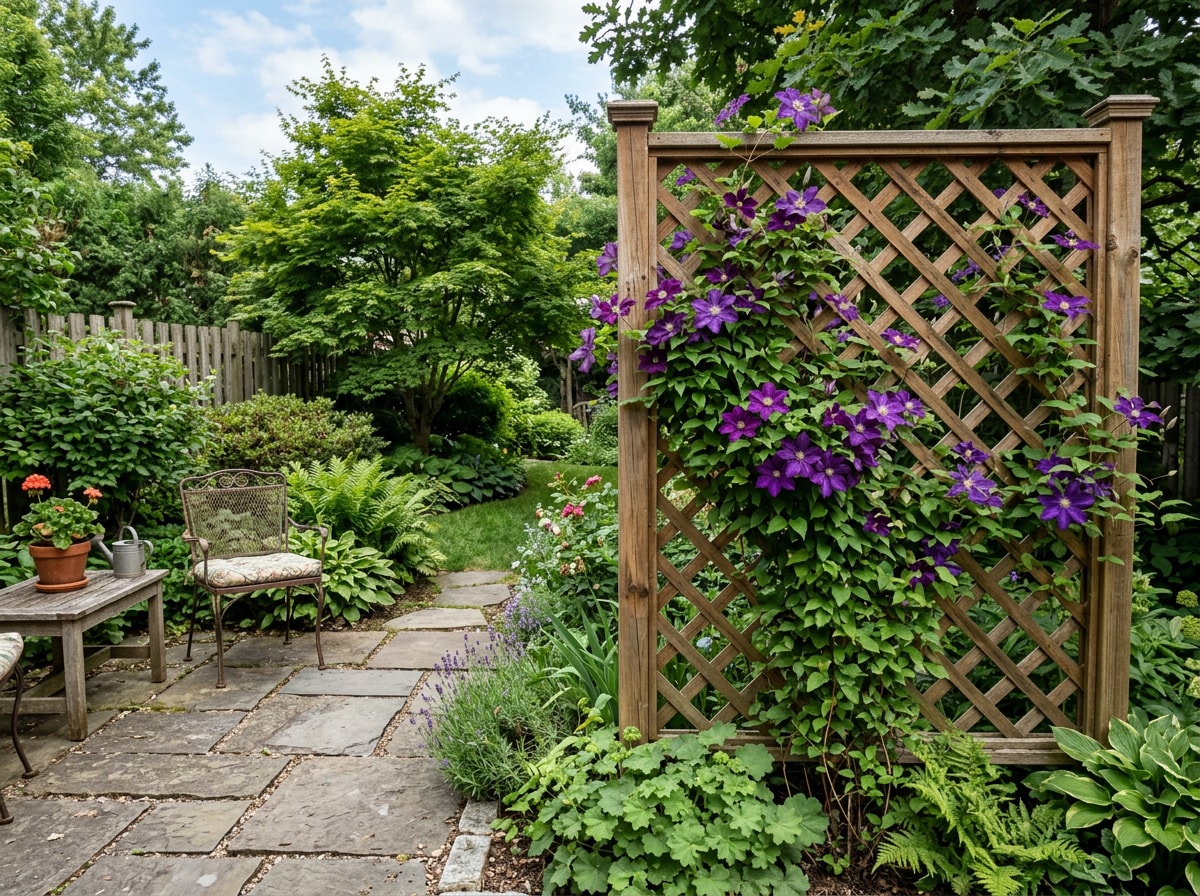
- A trellis with fast climbers like clematis or climbing hydrangea gives you a green wall within one or two growing seasons.
- Raised flower beds create a soft visual boundary without any permanent structure.
- Tall perennials and ornamental grasses fill gaps at eye level while young trees and shrubs mature.
None of these replace a mature tree line or hedge, but they're the cheapest way to buy privacy now while you wait for a permanent planting to fill in.
Hardscape vs. Living Privacy Barriers
Privacy solutions fall into two categories: hardscape barriers you build, and living barriers you grow. Most well-designed yards use a mix of both, since each solves a slightly different problem.
Hardscape Privacy Barriers
Hardscape barriers offer immediate, year-round screening, unlike plants that need time to mature. Fencing is the most common option, available in wood, bamboo, metal, vinyl, or composite, in solid panels or styles with decorative openings. Walls built from stacked stone, brick, or masonry block add a more permanent, architectural feel.
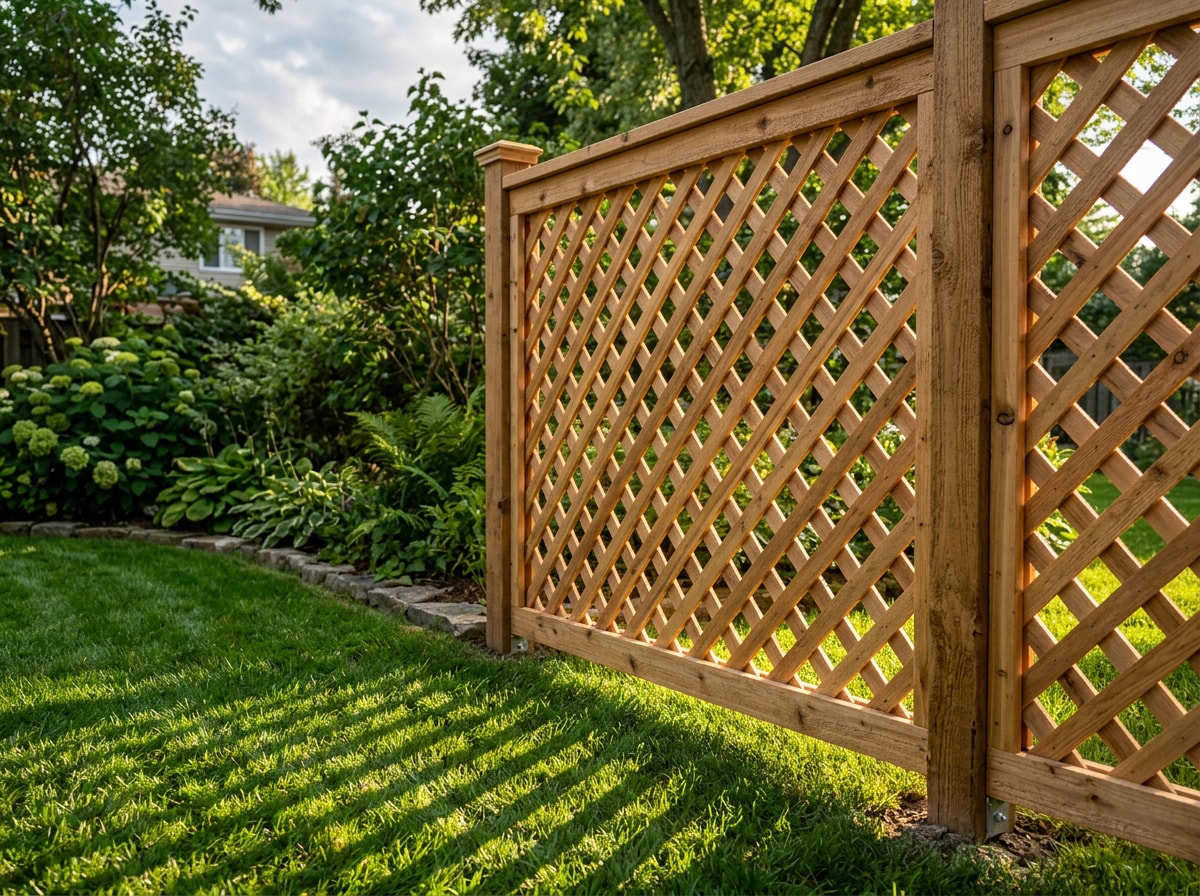
A lattice fence or slatted screen is a good middle ground when you want privacy without a solid wall. On sloped rural lots, a retaining wall can double as both grade control and a privacy element.
Before building anything permanent, check local rules. A building permit is required for all fence installations upon lots or parcels within the City of New Richmond , and fences up to 6 feet are allowed in rear and side yards, while front yards are limited to 3 feet if solid or 4 feet if less than 50% opaque . Rural St. Croix County parcels often carry different setback rules, so confirm specifics with the City of New Richmond Building and Zoning Department before finalizing a design.
Living Privacy Barriers
Living barriers use plants instead of structures, and they do more than block a sightline. Trees, shrubs, and vines absorb street noise, block wind, filter dust, and give birds and pollinators somewhere to live, benefits a fence can't offer.
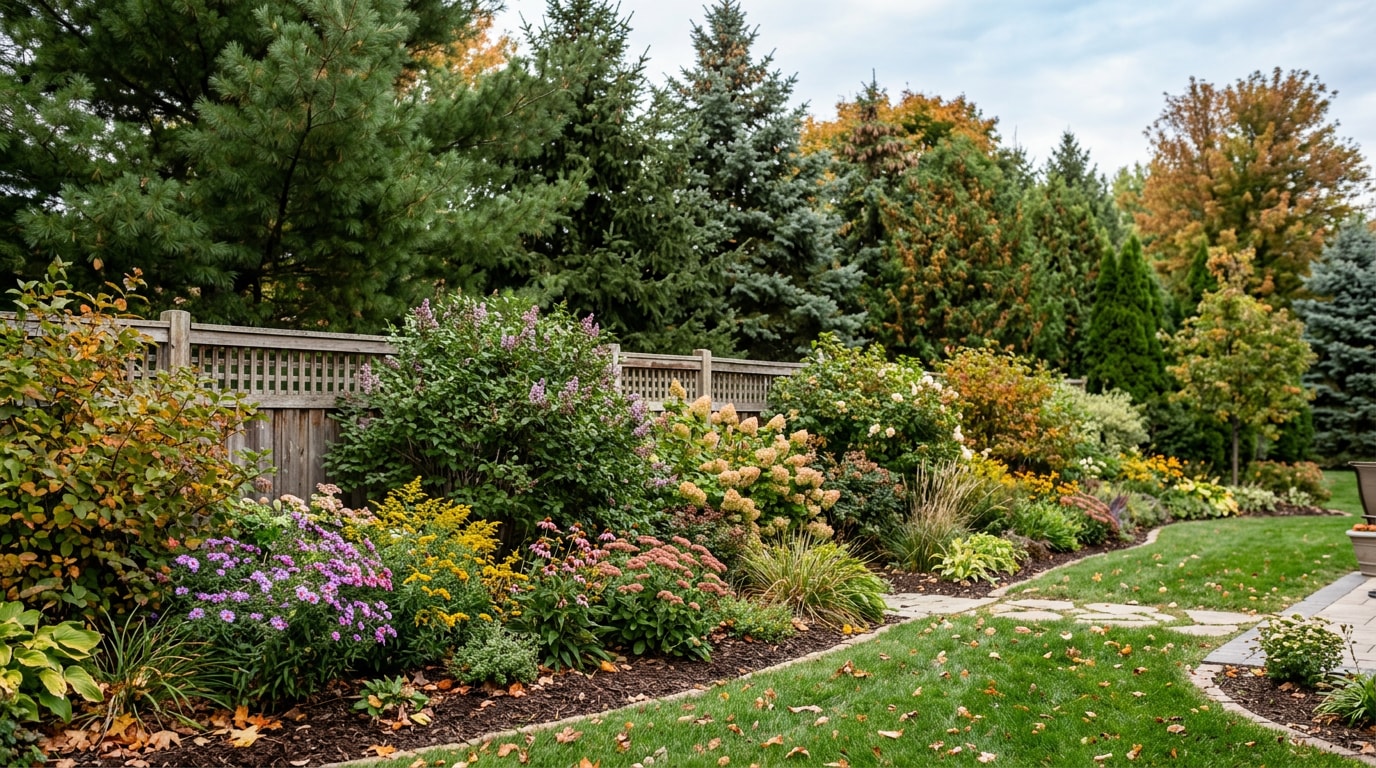
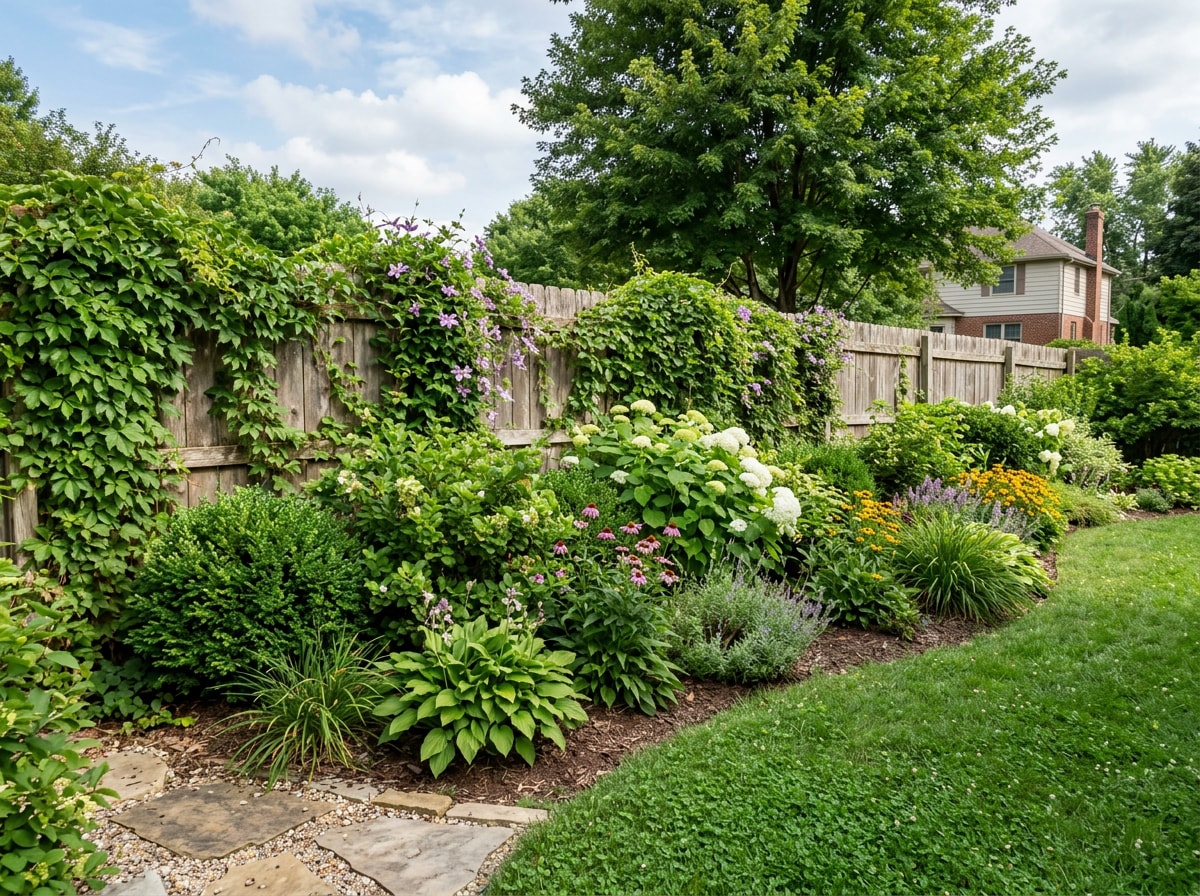
Options range widely: trees for overhead canopy, shrubs for formal or informal hedging, vines trained up a trellis or pergola, and perennial plantings or ornamental grasses that screen at eye level while still letting light move through. Vines are a low-cost way to soften an existing fence, and groundcover planted along a bed edge helps a privacy border read as intentional rather than leftover. If grass is creeping into those new beds, our guide to keeping grass out of flower beds in New Richmond walks through the fix.
Best Privacy Trees for New Richmond's Zone 4b Climate
New Richmond sits in USDA Hardiness Zone 4b (-25°F to -20°F) . That number matters more than most homeowners realize. A tree rated for a half-zone warmer climate can thin out or suffer dieback in an exposed yard during a hard winter, even if it looks fine at the garden center.
We've installed privacy screens across dozens of St. Croix County lots, and the most common mistake we see is a single row of Green Giant Arborvitae planted on an open, windswept site. Green Giant is the most popular privacy tree in America for good reason, it grows 3-4 feet per year, holds a dense pyramidal form without pruning , but it's only rated for zone 5-8 , a half-zone warmer than New Richmond. On an exposed rural lot without windbreak, it can brown out or die back in a severe winter.
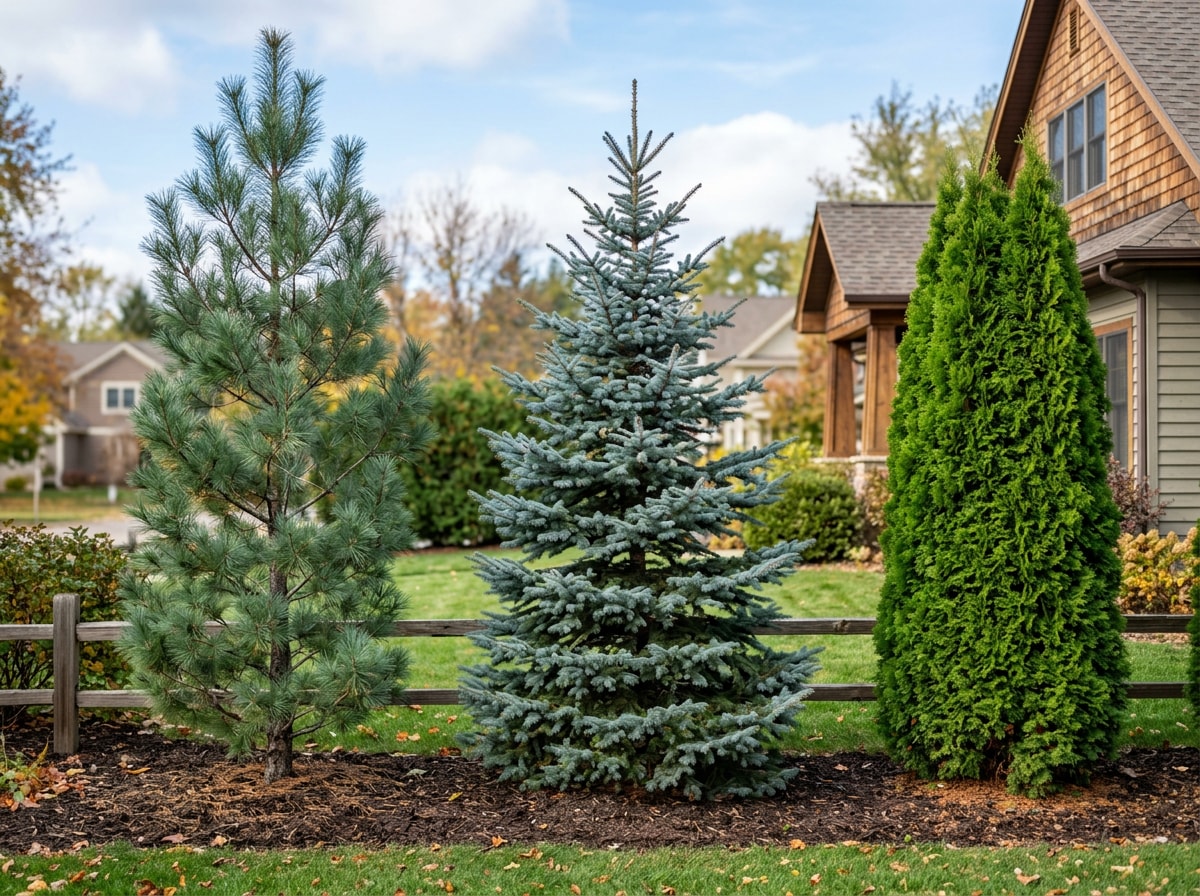
Eastern White Pine is a safer bet for fast coverage: it's a Midwestern native that grows 2-3 feet per year once established, screens beautifully as a row, tolerates poor soils, and is hardy to zone 3-8 . Emerald Arborvitae is the more cold-tolerant alternative to Green Giant, staying compact and under 4 feet wide, reaching 10-15 feet tall, with foliage that holds its color through winter and is hardy to zone 4-7 .
| Species | Mature Height | Growth Rate/Year | Hardiness Zone | Deer Resistance |
|---|---|---|---|---|
| Eastern White Pine | 50–80 ft | 2–3 ft | 3–8 | Low–Moderate |
| Colorado Blue Spruce | 30–60 ft | 1–2 ft | 2–7 | High |
| Green Giant Arborvitae | 30–50 ft | 3–4 ft | 5–8* | Low |
| Emerald Arborvitae | 10–15 ft | 6–9 in | 4–7 | Low |
*Green Giant is rated one half-zone warmer than New Richmond; plant it only where it gets wind shelter from a building or existing tree line.
Deer pressure is a real issue for rural properties, arborvitae is a favorite winter food source, so fencing young trees or choosing a less palatable species is worth planning for upfront. For zone-specific planting guidance beyond this list, the University of Minnesota Extension's tree and shrub selection guide is a reliable resource, and our landscaper services team can match species to your specific site conditions.
Privacy Hedges & Shrubs for In-Town Lots
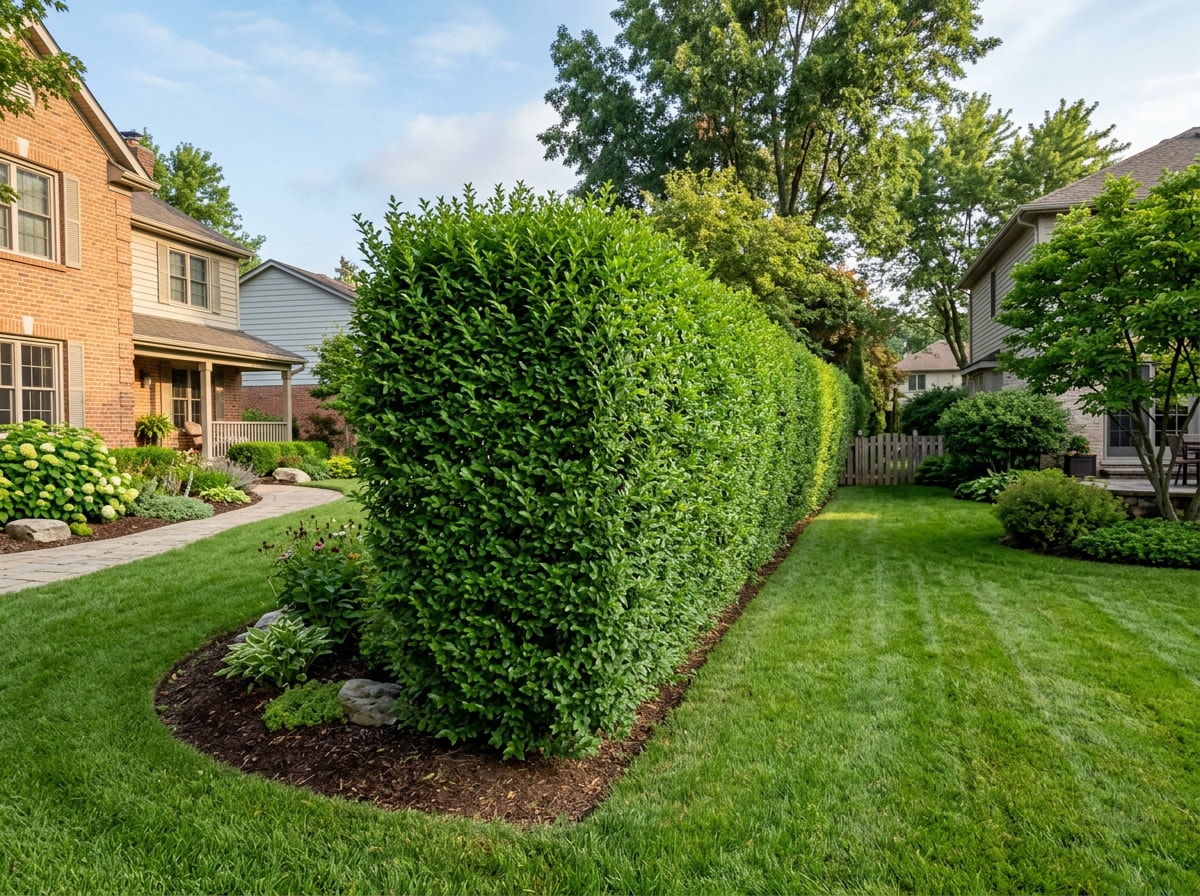
Hedges offer a more tailored look than a tree line and work especially well along property lines on smaller, in-town New Richmond lots where a full canopy would feel oversized. Sheared privet remains one of the most common privacy screens because it can be trimmed to almost any height for a clean, formal edge.
For a softer look, shrubs like Korean lilac add seasonal color and fragrance while still building a dense screen over a few seasons. Hedge screening pairs well with a shorter fence, adding height without requiring a taller structure. Whatever you plant, a hedge only stays dense with regular shearing; our landscape maintenance crews handle that upkeep so the screen doesn't thin out at the base.
Layering for a Noise-Blocking, Long-Term Screen
A single row of evergreens looks flat over time, and if it's thin, it won't do much for sound. This is where most DIY privacy plans fall short: a single row of trees usually does not provide meaningful noise reduction .
What actually works, per research from Iowa State University Extension: dense, wide, and tall plantings can absorb and deflect sound waves, and well-designed buffers can reduce sound levels by up to 10 decibels, although reductions of 5 to 8 decibels are more common . Depth matters more than most homeowners expect, when using trees and shrubs alone, a planting width of at least 100 feet is often needed for a meaningful effect against road noise.
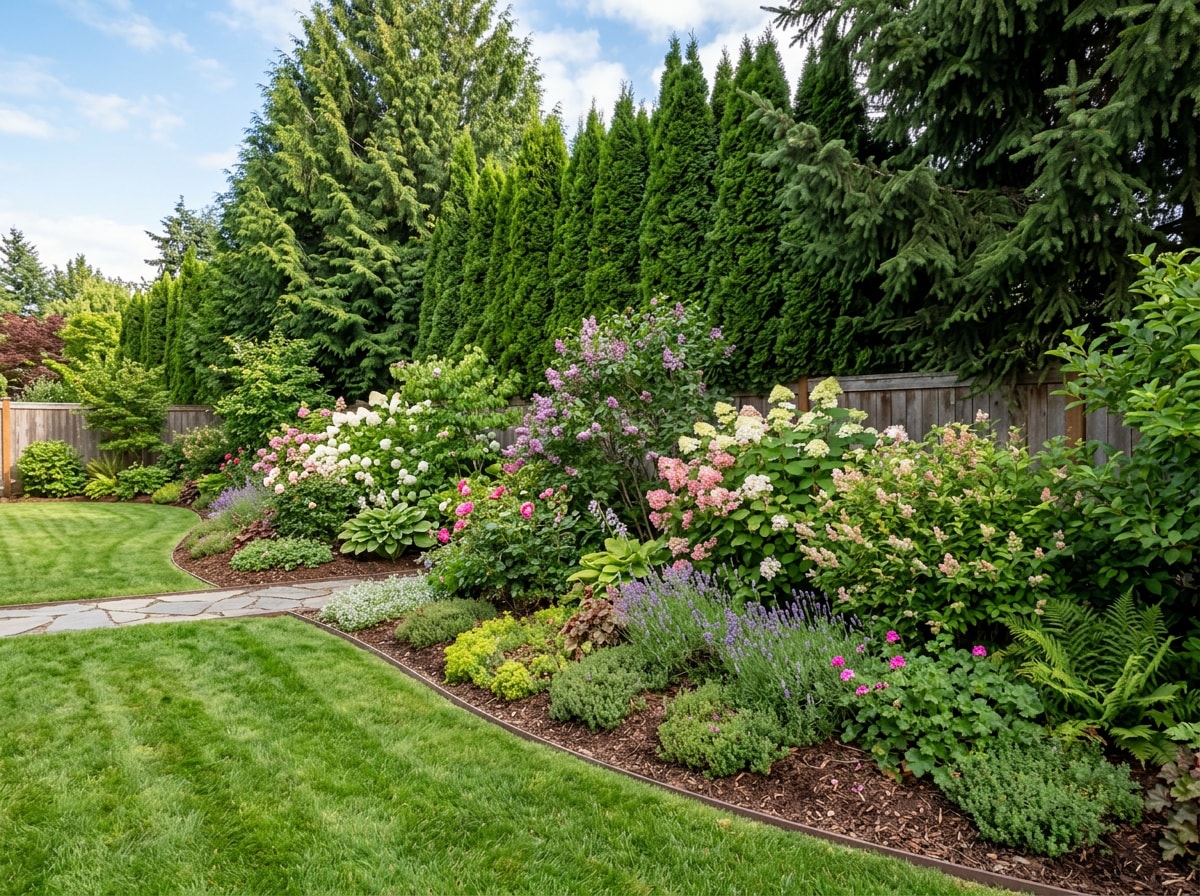
For most residential lots, that 100-foot depth isn't realistic, so layering does the heavy lifting instead: tall evergreens at the back, mid-height shrubs filling the gap near the ground, and a groundcover or perennial border at the front. If one layer gets damaged by weather or deer browsing, the others still provide coverage, and the mix reads as intentional rather than a straight plant line.
Local Permits, Setbacks, and HOA Rules
Before you plant or build, confirm what's actually allowed. New Richmond requires a permit for fence installations within city limits, with height caps that differ for front yards versus rear and side yards. Rural St. Croix County parcels fall under separate zoning setbacks, and HOA covenants (if you have one) may add further restrictions on fence materials or hedge height along shared lot lines.
It's a five-minute call that saves a rebuild later. If you'd rather hand that coordination off, get a free estimate and we'll confirm what's allowed on your specific lot before any plan is finalized.
Water Features, Trellises & Other Privacy Add-Ons
A few additional ideas round out the toolkit. A pondless water feature adds a layer of white noise that helps mask traffic or neighbor sounds while giving a plain barrier a focal point. A trellis works similarly to a wood lattice fence, supporting climbing plants like clematis while defining a privacy zone.
None of these replace a tree or hedge line, but they fill gaps around a deck, patio, or seating area where a full planting isn't practical. You can see how these pieces come together on real New Richmond-area properties in our project gallery.
FAQ
What's the fastest-growing privacy plant for New Richmond yards?
Green Giant Arborvitae grows the fastest at 3 to 4 feet per year, but it's rated for zone 5 and above. For a fast grower that's fully hardy to New Richmond's Zone 4b, Eastern White Pine (2 to 3 feet per year) is the safer choice on exposed lots.
What's the cheapest way to add backyard privacy without a fence?
Outdoor curtains, a trellis with fast-growing vines, and raised flower beds cost the least and require no permit. They won't replace a hedge or tree line long-term, but they work immediately while plants mature.
How far apart should I plant a privacy hedge?
Most hedge shrubs and small evergreens need 3 to 5 feet of spacing for a dense, unbroken screen without excessive future pruning. Larger trees like White Pine need more room, roughly 10 to 15 feet apart, to avoid crowding as they mature.
What is the best privacy tree for a yard?
For New Richmond's Zone 4b climate, Eastern White Pine and Emerald Arborvitae are the most dependable choices. Both are fully winter-hardy and form a dense, year-round screen without the dieback risk that comes with zone-marginal species.
Are arborvitae deer resistant?
No. Arborvitae is generally not deer resistant and is a preferred winter browse for deer. Rural New Richmond properties with heavy deer traffic may need fencing or repellents to protect young plantings.
How can I reduce noise pollution in my yard?
Dense, layered plantings, not a single row, do the work. Well-designed vegetative buffers can reduce sound levels by up to 10 decibels, with 5 to 8 decibels being more typical . A water feature adds masking noise on top of that.
Do I need a permit for a privacy fence in New Richmond?
Yes. A building permit is required for all fence installations on lots within the City of New Richmond . Rural St. Croix County parcels have separate zoning setbacks, so confirm with the local building department before you build.
Ready to plan your own privacy project? Get a free estimate from our New Richmond landscaping team, or visit our homepage to see the full range of services we bring to St. Croix County yards.
About the Author
This guide was written by the design team at Sunrise Lawns & Landscaping, a landscaping and hardscape contractor serving New Richmond, Hudson, Osceola, and the greater St. Croix Valley. Our crews install and maintain privacy plantings, retaining walls, and fencing-adjacent hardscape across this climate zone every season. Questions about your specific lot? Contact us directly.