Pruning trees and shrubs in Hudson, WI isn't just a tidiness chore; the timing of each cut determines whether a tree seals its wound or opens the door to disease. Get the season wrong on an oak and you risk losing the tree outright. Here's what actually works on St. Croix Valley properties, and when to schedule it.
Why Professional Pruning Matters More Here Than You'd Think
Hudson sits in a transition zone between hardwood forest and prairie, which means a single property can hold oaks, maples, arborvitae, and flowering shrubs that all demand different pruning windows. Cutting them all on the same schedule is one of the most common mistakes we see on St. Croix Valley properties.
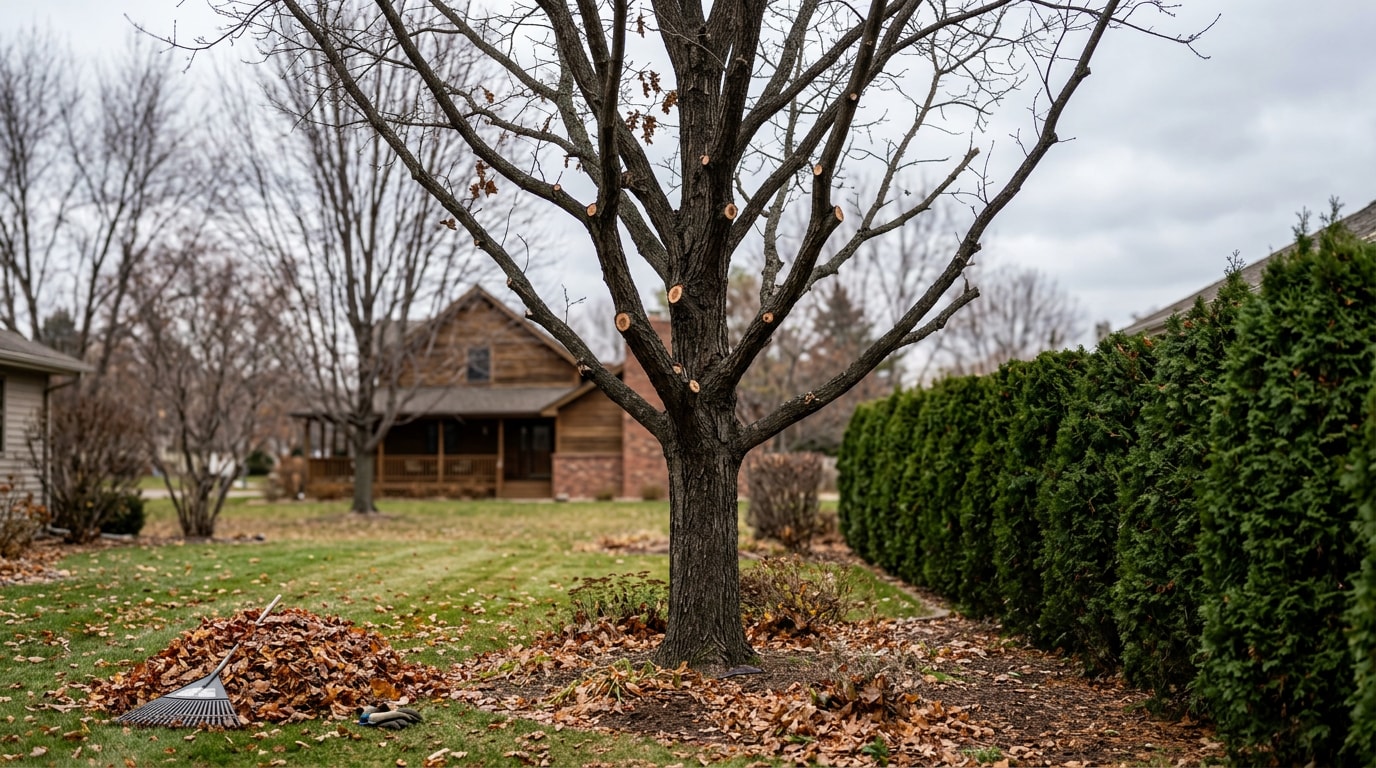
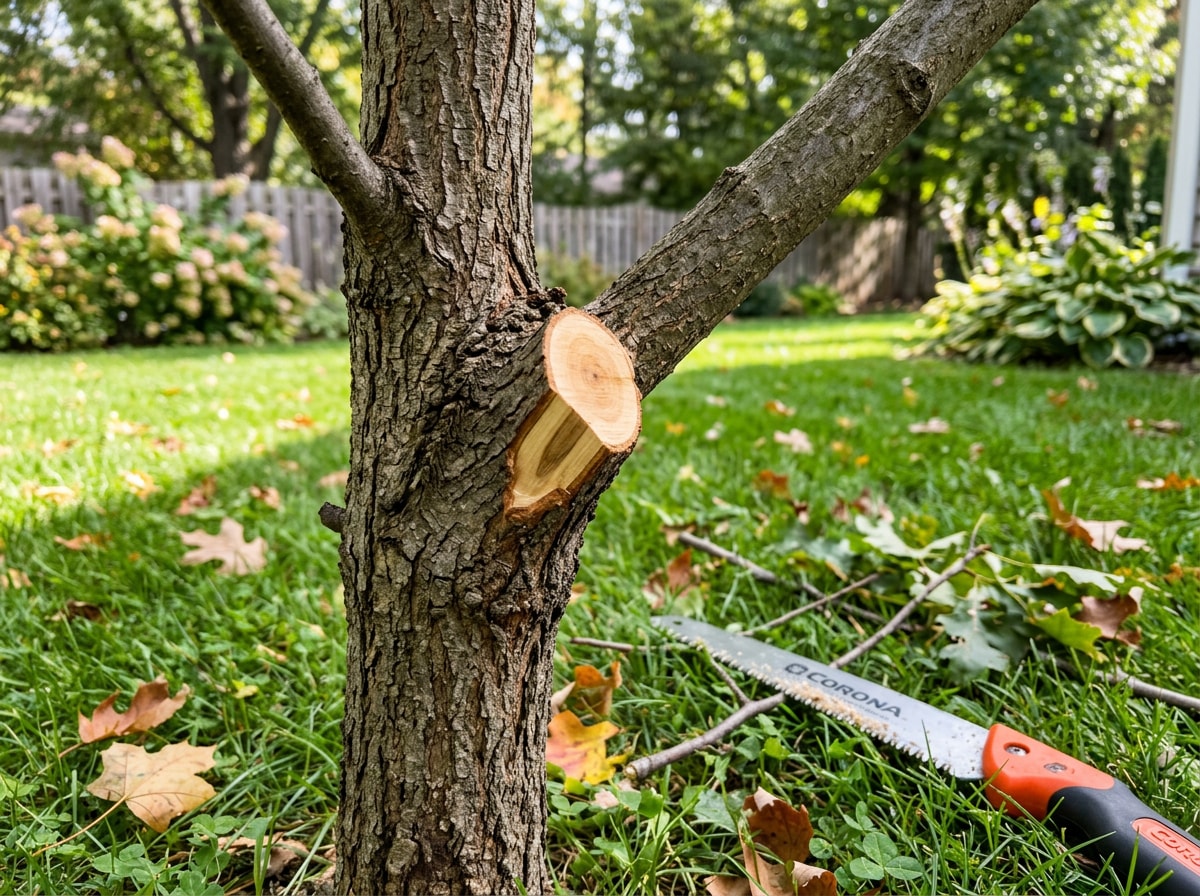
Every cut you make changes how a plant heals, where new growth goes, and how much stress it can handle before the next Wisconsin winter. A clean cut just outside the branch collar lets the tree compartmentalize the wound and keep growing strong. A ragged cut, or one made at the wrong time of year, invites decay, pests, and disease straight into the wound.
When to Prune: The Hudson, WI Pruning Calendar
Timing is the single biggest factor in whether pruning helps a plant or hurts it. This is the part most guides gloss over, and it's where Hudson homeowners run into trouble most often.
Dormant-Season Pruning (Late Fall Through Early Spring)
Frozen ground lets crews and equipment move across lawns without compacting soil or tearing turf. Bare branches also make structural problems, like crossed limbs or weak crotches, far easier to spot and correct.
Most shade and ornamental trees in Wisconsin do best with dormant-season pruning. Late fall through late winter is the best window for most ornamental and shade trees, since once the leaves drop, the branch structure is easy to see, cleanup is simpler, and the insects and fungi responsible for most tree diseases are inactive.
The Oak Wilt Window You Cannot Ignore
Oaks are the one tree in the St. Croix Valley where timing isn't just a best practice, it's the difference between a healthy tree and a dead one. The Wisconsin DNR has established statewide guidelines dividing the state into two zones, with a North Zone restriction from April 15 to July 15 and a South Zone restriction from April 1 to July 15. Hudson falls close to that zone boundary, so if you're unsure which window applies to your property, treat April through mid-July as off-limits for any oak cuts.
Sap-feeding beetles have an incredible sense of smell, which draws them to open wound surfaces to feed on sugary sap in as little as 15 minutes after a tree is wounded, and that is how most new oak wilt infections start. Wisconsin's own forestry outreach confirms the safe window reopens once the weather turns: the DNR's southern-zone high-risk pruning window runs April 1 through July 15, and infection risk stops after the first fall frost. In practice, that means late fall through winter is your safest stretch for any oak on your property.
Spring-Flowering vs. Summer-Flowering Shrubs
Shrubs split into two camps, and pruning them at the wrong time costs you a season of blooms.
Spring-flowering shrubs produce flower buds on wood from the previous summer, so they should be pruned after they flower in spring, but before next year's buds are set; pruning them in winter or early spring removes many of the flower buds.
Summer-flowering shrubs produce buds on new spring growth, so they should be pruned while dormant or in early spring before budbreak, since postponing until late spring or early summer removes many flower buds.
| Plant Type | Best Pruning Window | Why |
|---|---|---|
| Oaks (red & white groups) | November through March | Avoids oak wilt beetle activity |
| Maples, shade trees | Late fall to early spring (dormant) | Easier to see structure, wounds close fast |
| Evergreens, arborvitae | Late winter to early spring | Minimizes sap loss, preserves form |
| Spring-flowering shrubs (lilac, forsythia) | Right after blooming | Protects next year's flower buds |
| Summer-flowering shrubs (hydrangea, potentilla) | Dormant season or early spring | Buds form on new growth |
| Deadwood (any species) | Any time of year | Removes hazard immediately |
Types of Pruning We Perform on Hudson Properties
Not every pruning job solves the same problem. Matching the technique to the issue is what separates effective pruning from guesswork with a chainsaw.
- Structural pruning — shapes young trees early so they develop strong branch angles and a single dominant leader, reducing storm damage risk for decades.
- Crown thinning and reduction — opens the canopy for light and airflow or brings down an oversized crown without the stunted regrowth that comes from topping.
- Deadwood removal — takes out dead, dying, or diseased limbs before they drop on their own; this is typically the first priority on any visit since dead limbs pose a safety risk in every season.
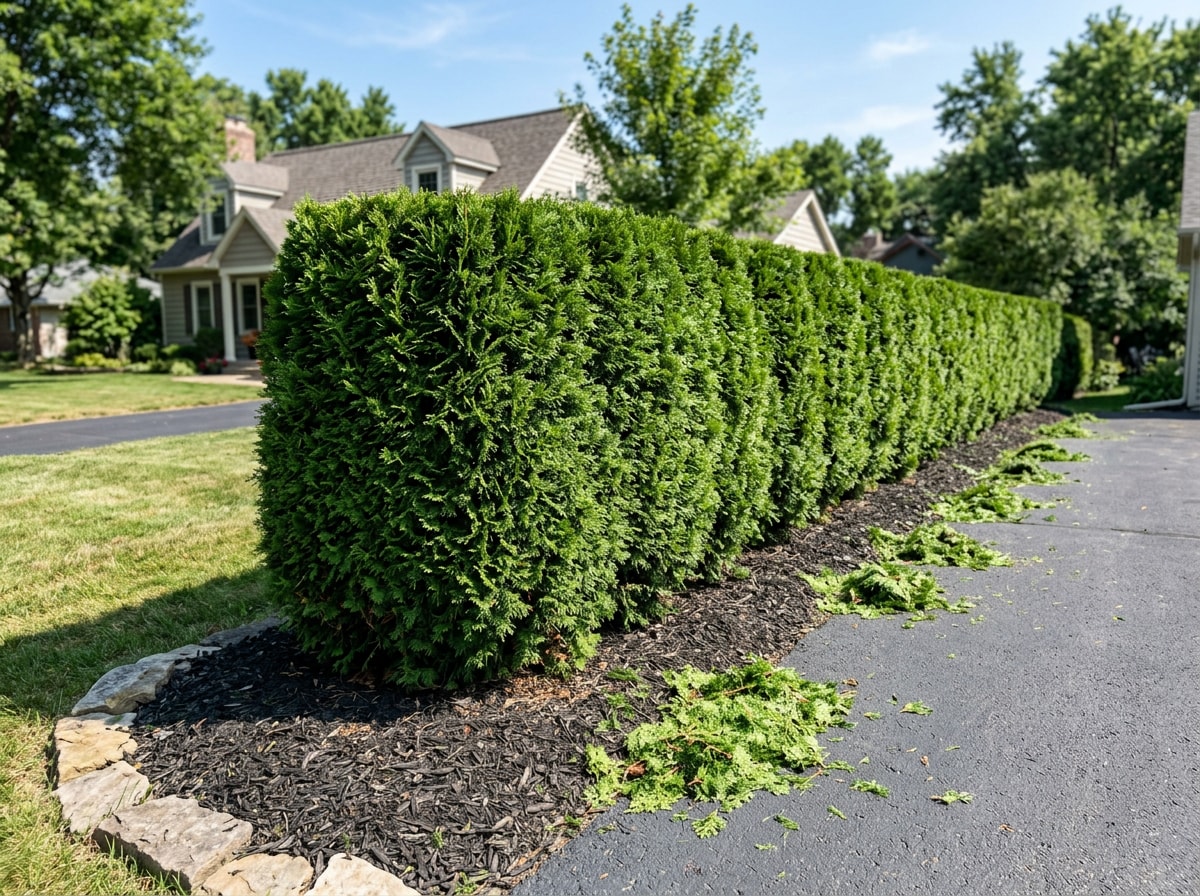
- Shrub and hedge shaping — keeps arborvitae, boxwood, and mixed borders dense and full instead of hollow and woody at the base.
- Utility line clearance pruning — removes limbs growing into power line right-of-ways. This is specialized, regulated work;
entire sections of OSHA's electrical safety standard apply to line-clearance tree-trimming operations performed by qualified employees who are knowledgeable in the hazards associated with electric power equipment , which is why it should never be a DIY project.
DIY Pruning vs. Hiring a Professional
A pair of loppers and a weekend will handle light shaping. Anything involving height, power lines, or a tree's long-term structure is a different calculation.
| Factor | DIY Pruning | Professional Pruning |
|---|---|---|
| Tool access | Hand pruners, loppers | Pole saws, rigging, chippers |
| Timing knowledge | Easy to miss species-specific windows | Scheduled around dormancy and oak wilt risk |
| Large limb removal | Risk of tears, falls, property damage | Three-point cuts prevent bark stripping |
| Power line proximity | Should not attempt | Required by safety regulation |
| Long-term tree health | Often shortens tree lifespan if done wrong | Supports structure for decades |
Heavy shearing or "topping" a tree yourself strips large sections of canopy, exposes interior wood, and triggers weak, fast-growing regrowth that's more likely to fail in the next windstorm. We've reworked more than a few topped trees on Hudson properties that would have been fine with a lighter, properly timed cut the year before.
Signs Your Trees or Shrubs Need Pruning Now
- Dead or broken branches hanging in the canopy
- Branches rubbing against the roofline, siding, or a structure
- A shrub border that's gone hollow in the middle or woody at the base
- Limbs growing into or near overhead power lines
- A canopy so dense that grass or perennials underneath won't grow
- Storm damage from the last high-wind event
If you're seeing two or more of these, it's worth a site visit rather than waiting for the next pruning cycle.
Pairing Pruning With a Full Landscape Plan
Pruning works best as part of a broader maintenance rhythm, not a one-off fix. Once trees and shrubs are structurally sound, it's easier to layer in other improvements, like fresh perennial plantings around a newly opened bed, or a landscape renovation and rejuvenation plan if overgrowth has been masking bigger issues in the yard. Our landscape maintenance program folds pruning into a seasonal schedule so it never gets skipped two years in a row.
If you're also refreshing turf after opening up a shaded area to more light, our guide on how to plant sod in Hudson, WI walks through timing and prep for that next step.
Serving Hudson, WI and the Surrounding St. Croix Valley
We work on residential and commercial properties throughout Hudson, WI and the surrounding communities, including New Richmond and Polk County. Browse our full landscaper services or see completed work on our projects page before you book.
Ready to get your trees and shrubs on a schedule that actually fits their species? Request a free estimate and we'll walk your property with you.
FAQ
What is the difference between tree trimming and tree pruning?
Trimming generally means shaping hedges and shrubs for appearance. Pruning is the strategic removal of specific branches to support a tree's long-term structure and health. In practice, most companies use the terms loosely, but the techniques behind them are different.
How often should trees and shrubs be pruned?
Mature trees typically need attention every 3 to 5 years. Young trees and flowering shrubs often benefit from lighter, more frequent pruning, especially in their first several years while structure is still forming.
Can you prune trees near power lines yourself?
No. Work within 10 feet of an energized line requires a qualified line-clearance tree trimmer under OSHA rules, and the voltages involved can be fatal even without direct contact. Always call a utility or a certified arborist for this work.
Does winter pruning work for every tree species?
Winter pruning benefits most species and is essential, not just preferred, for oaks. Dormant-season timing avoids the beetle activity that spreads oak wilt, which can kill a red oak within weeks of infection.
Can I prune my own shrubs, or should I always hire a professional?
Light shaping of small shrubs with hand pruners is a reasonable DIY task. Large limb removal, anything near power lines, or any cut on an oak between April and mid-July should go to a professional.
What does professional pruning cost in the Hudson, WI area?
Cost depends on tree size, number of plants, and how much structural work is needed, so pricing varies by property. The most reliable way to get an accurate number is a free on-site estimate rather than a flat per-tree rate.
Explore our homepage to see the full range of landscaping, hardscape, and maintenance services we bring to Hudson-area properties.