Sod installers in Polk County, WI deal with a short planting window, clay-heavy pockets, and waterfront lots that drain poorly the moment grading goes wrong. Get the prep right and a new lawn is mowable in three weeks. Get it wrong, and you're paying to re-sod the same yard next spring.
Here's what correctly installed sod actually requires in this part of Wisconsin, from soil test to first cut, plus real pricing so you know what to expect before a crew shows up. If you'd rather skip straight to scheduling, get a free estimate and we'll walk your yard with you.
Sod or Seed: Which Works on Your Polk County Lot?
Not every lawn here should be sodded. Most bluegrass sod needs several hours of direct sun a day, and yards shaded by mature oaks or pines along the St. Croix often do better with a shade-tolerant seed blend instead.
Where sun is adequate, sod has a real advantage besides speed: it's harder to grow weeds through it. Because it's very difficult to control weeds in newly seeded grass without herbicides, sod is a better bet for getting the lawn established . That matters if you want a reduced-chemical lawn near a lake or well.
If your lot is genuinely too shaded for sod to hold up, our grass seed installation service covers that scenario. For sunny lawns where speed matters, our sod installation page has coverage details and next steps.
How Much Does Sod Installation Cost in Polk County, WI?
Pricing is the first question most homeowners ask, so here's the real range. Average costs and prices reported for sod installation in Wisconsin run $1.32 per square foot installed, with a typical range of $1.22 to $1.41 . That figure covers sod and labor; grading, old-lawn removal, and soil amendments are usually quoted separately.
| Lawn Size | Estimated Installed Cost (WI avg.) |
|---|---|
| 1,000 sq ft | $1,220 – $1,410 |
| 2,000 sq ft | $2,440 – $2,820 |
| 3,000 sq ft | $3,660 – $4,230 |
If you're buying materials only, a pallet of sod will cost between $150 to $450, covering about 450 to 500 square feet . Rolls cost more per square foot but suit small or irregular patch jobs.
Site conditions move these numbers more than anything else. Steep grading, heavy clay that needs extra tilling passes, and full old-lawn removal all add cost on top of the base installed rate.
Preparing Your Yard for Sod Installation
Soil prep determines whether your new lawn roots well or struggles for years. Skipping steps here is the single most common reason a sodding job fails.
- Remove rocks, roots, and dead vegetation down to bare soil.
- Till the soil 4–6 inches deep so roots can establish freely.
- Grade the yard so water moves away from the foundation.
- Roll the soil to expose and fix low spots before sod arrives.
- Set the final grade slightly below sidewalks and driveways.
Grading tolerance isn't a guess. A 1 to 2 percent slope, meaning a 1- to 2-foot drop for every 100 linear feet, is usually sufficient to carry water away from structures without creating a yard that's hard to mow.
Polk County's clay-heavy pockets, especially around Balsam Lake and Amery, often need extra tilling passes compared to the sandier soils common elsewhere in western Wisconsin. Aerifying is worth building into a spring maintenance program, especially on sodded lawns with underlying clay soils , since compaction returns fast in heavy ground. For full UW–Madison guidance on grading and soil amendments, see the Extension's lawn establishment resource.
Measuring and Ordering Sod
Measure total square footage before calling anyone. That number decides whether you need rolls or pallets.
- Rolls suit tight, irregular spaces and patch repairs.
- Pallets work better for larger, open lawns and whole-yard jobs.
- Order 5–10% extra to cover trimming around beds, walkways, and curves.
That overage rule answers "how much sod do I need" without guessing on delivery day, when a shortage means waiting another day for a second load while the first pallet dries out on the pallet.
The Professional Sod Installation Process
Laying sod correctly starts along the longest straight edge, usually a driveway or sidewalk, then staggers each row in a brick-like pattern. Seams should touch snugly without overlapping. That's what prevents visible seam lines and dry edges once the lawn fills in.
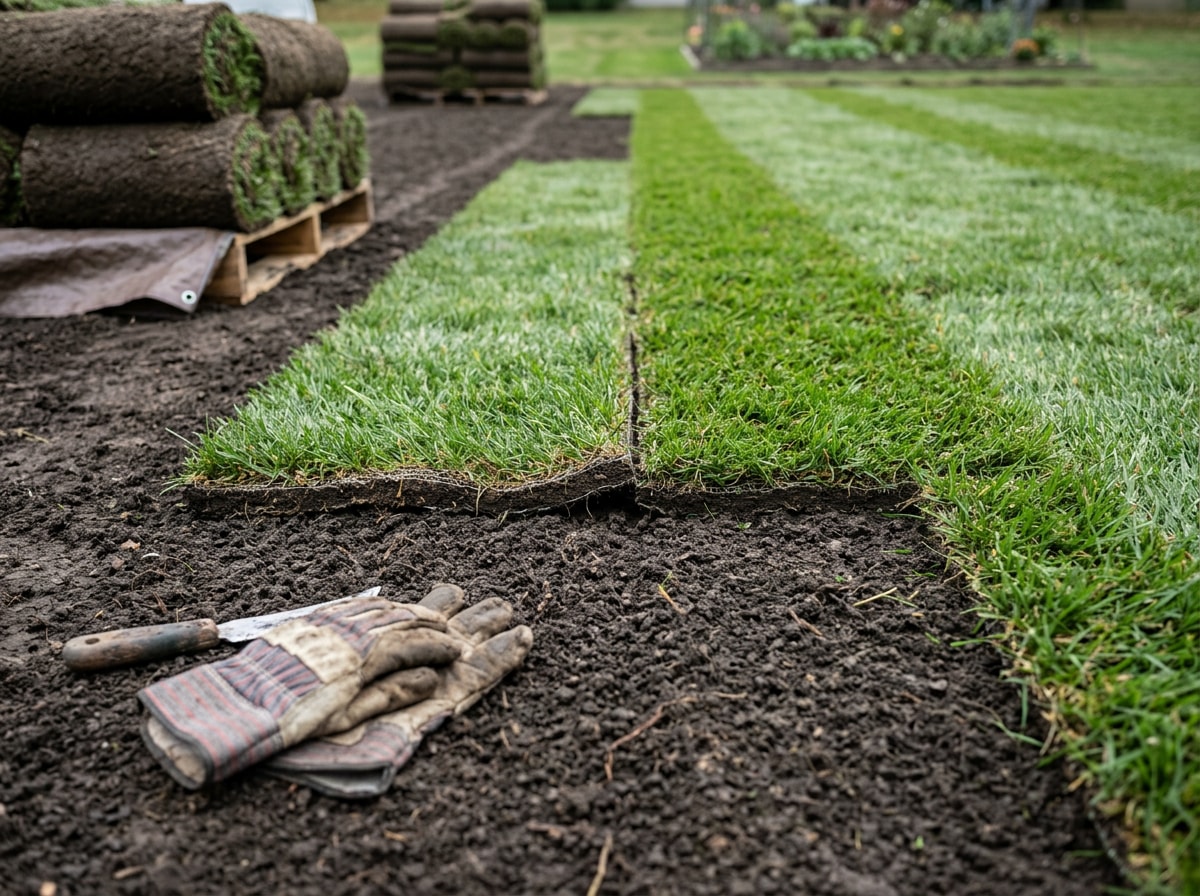
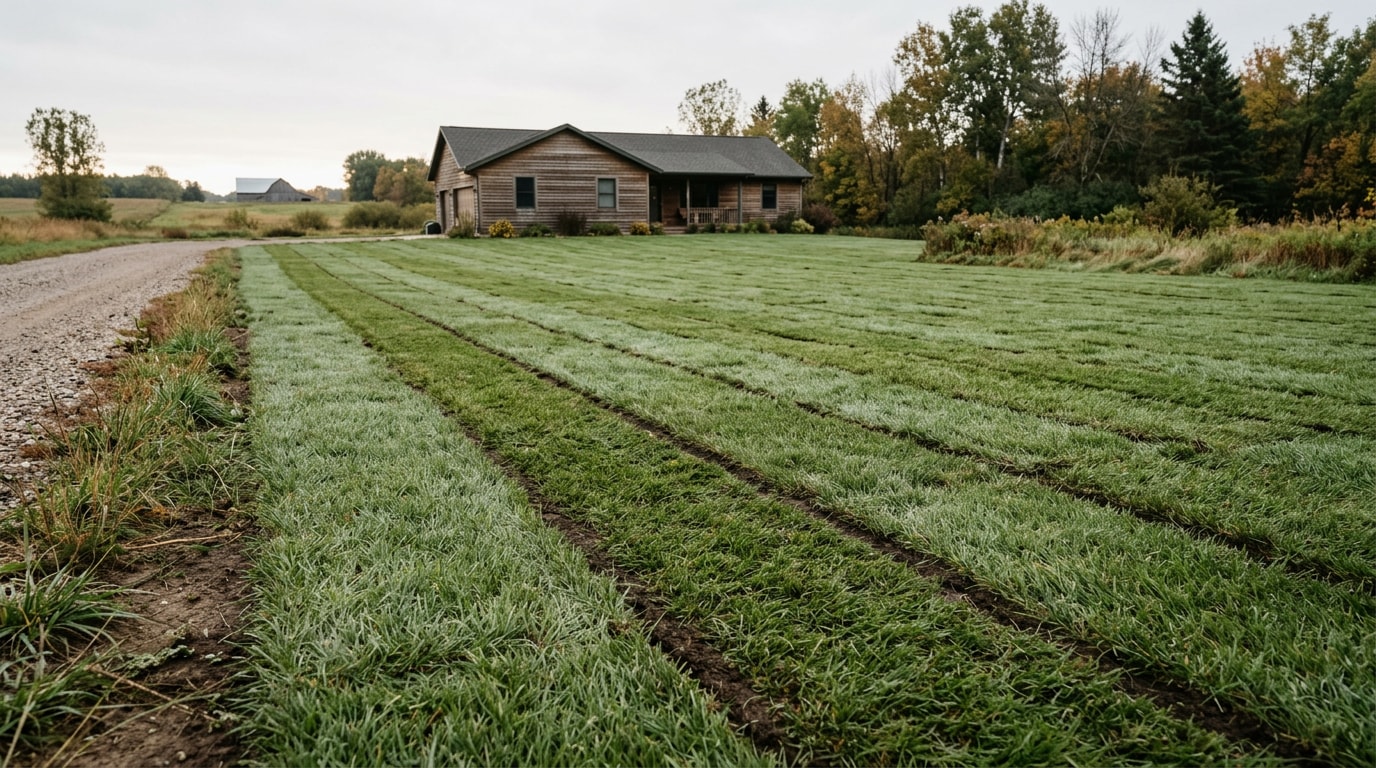
Timing matters more than most homeowners expect. The normal rooting period takes about 10 to 14 days, and full establishment is expected to take 4 to 6 weeks . Crews water immediately after laying each section so roots never dry out before they reach the soil, and sod that sits too long before watering can die in the heat before it ever takes hold.
On a shaded, waterfront lot near Balsam Lake, our crew found standing water had already killed two prior seeding attempts on the same spot. Re-grading the low corner before laying sod let the new lawn root in under three weeks instead of failing a third time.
Caring for Your New Sod After Installation
New sod care comes down to two habits: consistent watering and patient mowing. Get both right and the lawn establishes on schedule.
Watering New Sod
Water new sod daily for the first two weeks, enough to keep the top few inches of soil consistently moist but not soggy. Once roots anchor into the ground, usually by week two or three, shift to deeper, less frequent watering. This mirrors general outdoor watering guidance from the EPA, which notes that many landscapes require about one inch of water per week, though the amount varies by location and recent weather . Full details on efficient watering schedules are on EPA WaterSense's seasonal watering page.
Mowing New Sod
Check root strength with a gentle tug before the first mow. Resistance means it's ready, usually within two to three weeks. Set the mower to its highest setting for the first couple of cuts, then gradually lower the height over the following weeks.
If your irrigation system needs adjusting for a new lawn's watering schedule, our irrigation system servicing team can handle that at the same time.
DIY vs. Professional Sod Installation
| Factor | DIY | Professional |
|---|---|---|
| Grading accuracy | Variable, hard to verify without tools | Consistent, checked before sod arrives |
| Seam placement | Often visible | Tight, staggered per industry spec |
| Watering timing | Often delayed by hours | Immediate after each section |
| Time investment | A full weekend or more | Typically one day |
Industry guideline specifications maintained by Turfgrass Producers International call for sod to be laid "in smooth even staggered rows, and closely knit together" with joints no wider than an eighth of an inch. Crews who install sod every week hit that standard by habit. First-time installers usually don't, simply because they haven't done it enough times to know what "too dry" or "too loose" looks like before it's a problem. You can review TPI's full specifications at turfgrasssod.org.
Serving Polk County and Nearby Communities
We install sod across Polk County, WI, including lots in Osceola and Amery, along with neighboring service areas in Hudson, WI and across the border in Chisago County, MN. If you're weighing a full lawn tear-out versus patch repair, our Residential Turf Installation in Polk County, WI: 2026 Guide walks through that decision in more depth.
Once the lawn is in, ongoing care keeps it looking the way it did on install day. See our landscape maintenance services or visit our homepage for the full range of what we handle.
FAQ
Is sod or seeding less expensive to install and maintain?
Seeding costs less upfront, but sod delivers an established lawn in days instead of months. For homeowners who want immediate results, or who need to control erosion on a slope right away, sod often offsets the price difference.
How long does sod take to root in Wisconsin?
Most sod roots within 10 to 14 days under proper watering conditions, with full establishment taking 4 to 6 weeks. Cooler, humid weather can shorten that window slightly, while heat stress can extend it.
When is the best time to install sod in Polk County?
Spring and late summer into early fall work best. Both windows avoid midsummer heat stress and the frozen soil that stops roots from establishing in winter.
Can sod be installed over existing grass?
No. Existing grass and weeds need full removal first. Sod requires direct soil contact to root properly, so skipping this step risks a failed installation and wasted material.
How much does a sod installer in Polk County, WI charge?
Expect roughly $1.22 to $1.41 per square foot installed as a statewide baseline, with site prep, grading, and old-lawn removal added on top depending on your yard's condition.
Do I need to water new sod every day?
Yes, for the first two weeks. After roots anchor, usually around week two or three, you can shift to deeper watering two or three times a week instead of a daily light watering.
Ready to get your lawn scheduled before the next planting window closes? Request your free estimate and we'll confirm timing, pricing, and prep work specific to your lot.
Written by Mark Jensen, Lead Landscape Foreman at Sunrise Lawns & Landscaping, who has overseen sod installations across Polk County's clay and sandy soils for over a decade. Questions about your yard? Contact our crew directly.